A Tapestry of Connection Phase II

I have just had a consultation with Corinna Krause in her purpose-built bookbinding workshop at Sollas Books. It was a well organised and inspiring space to be in and talk through ideas.

We discussed my plan to create a collaborative book bringing together the work I’ve been developing with the lovely participants from Craigard Day Care Centre. From the outset, Corinna was incredibly helpful — intuitive, thoughtful, and very much on the same wavelength about what would best honour the spirit of the work.

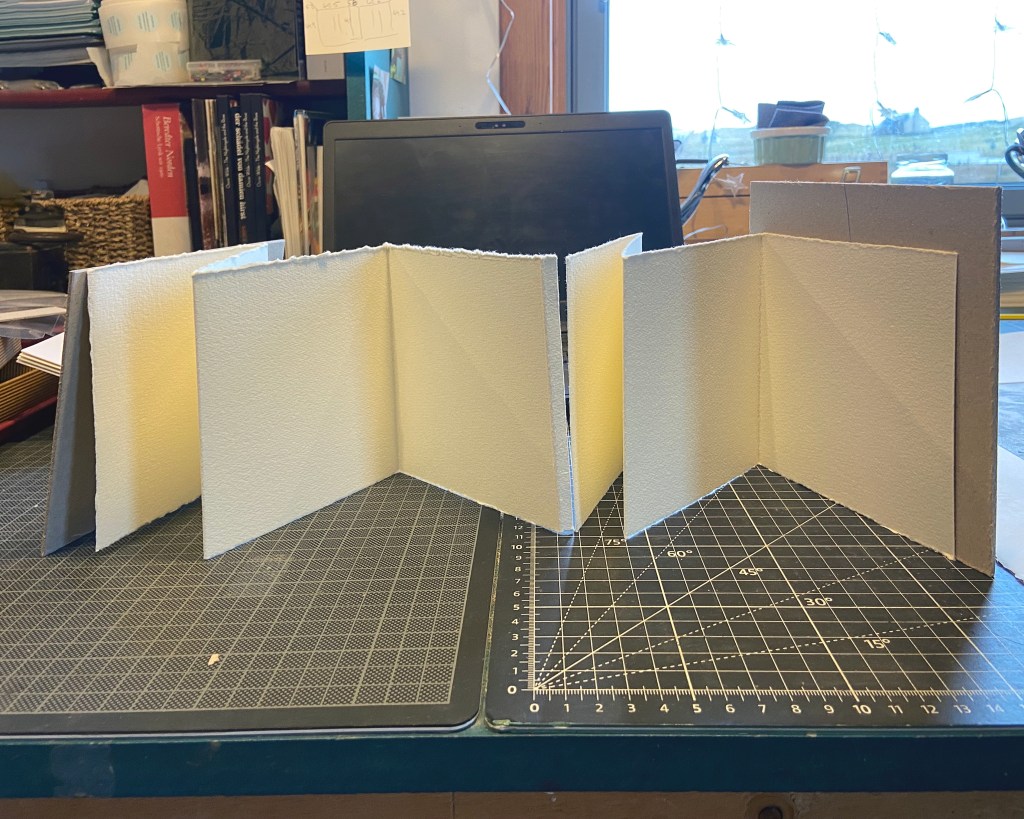
Together we decided on a concertina folded book format. The structure feels perfect — it will allow the work to unfold gently, giving each piece space while still holding everything together as one continuous visual conversation. It feels important that the book itself reflects the collaborative nature of the project: a flow of individual contributions connected within a shared structure.

This will truly be a collaboration on several levels — between the service users and myself through the making of the artwork, and then between Corinna and I in shaping how that work is held and presented. I’m especially excited about this partnership, as bookmaking is something I’ve always been drawn to. It feels like this could open up new ways of thinking about how I make and display my prints in the future.

I’ll be making a small edition of six books — each of us will have two copies — and I can’t wait to tell the group at next week’s workshop. It feels like a meaningful way to celebrate what we’re creating together.

supported by Creative Scotland.

A tapestry of Connection Phase II

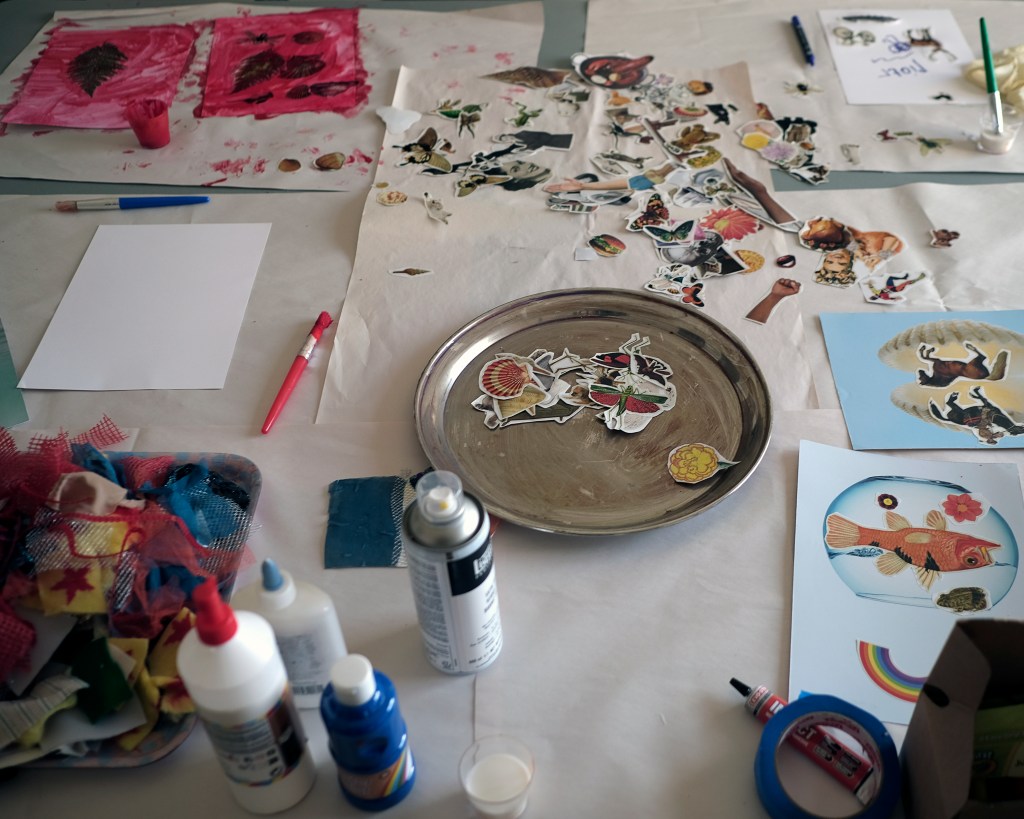
This week marked the second session of the phase II workshops – Collage, Layering & Surfaces.

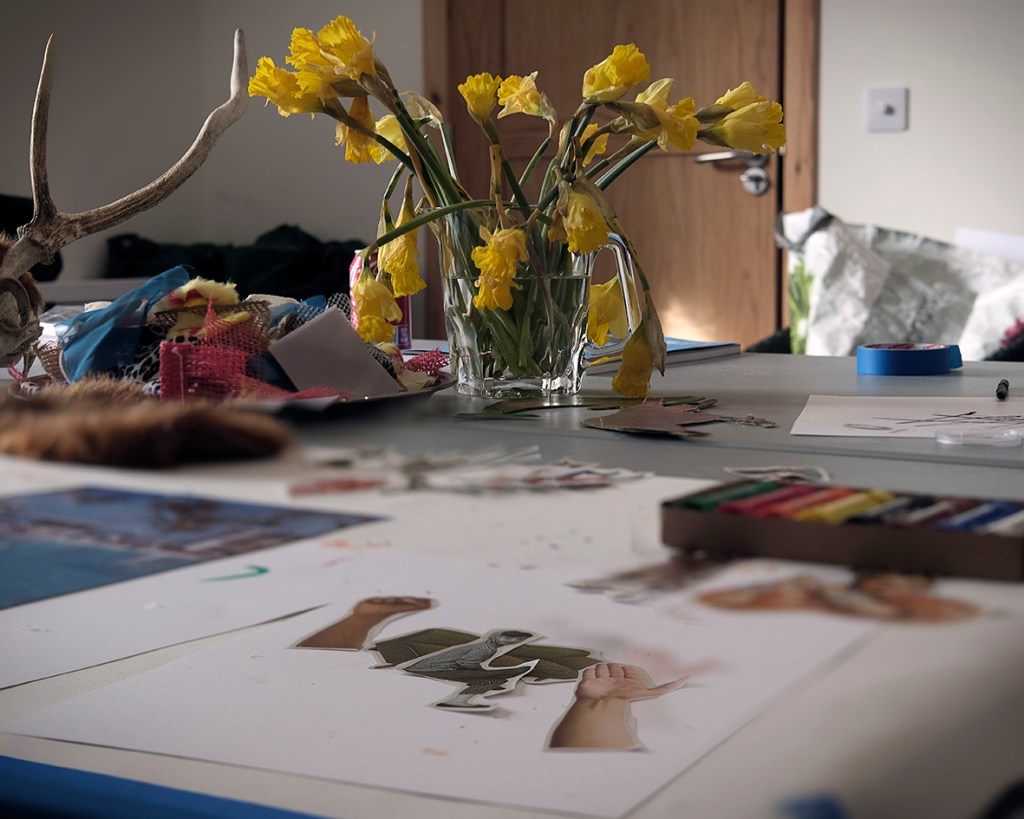
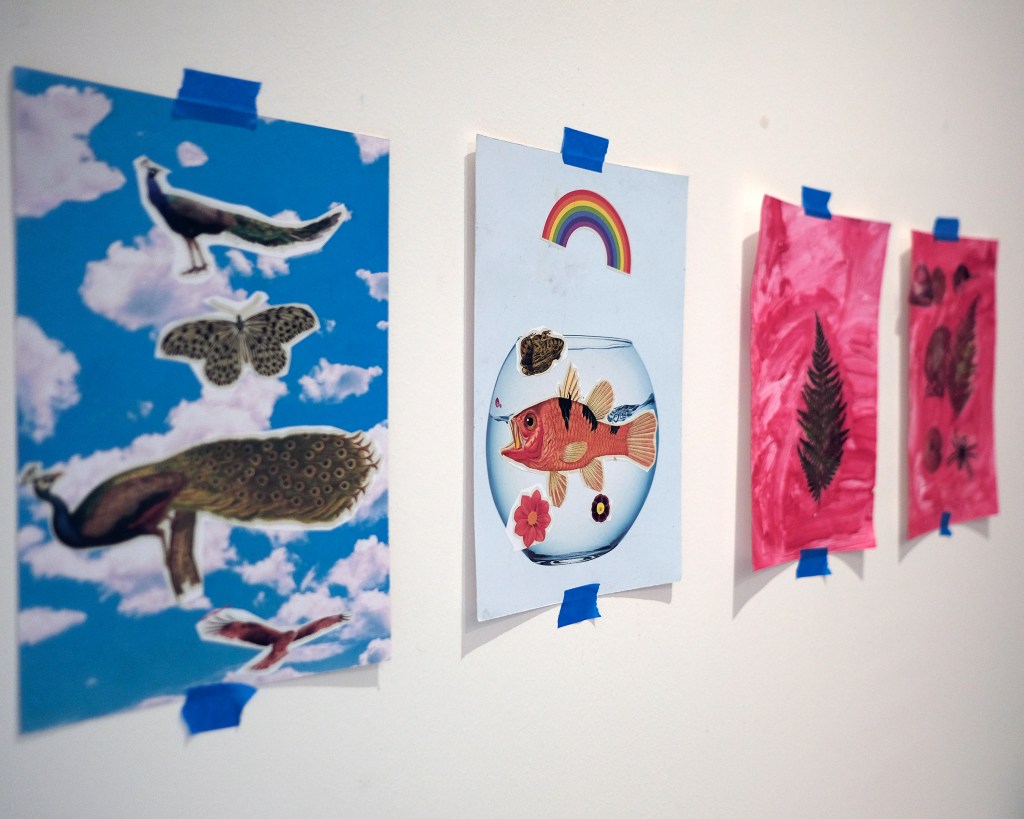
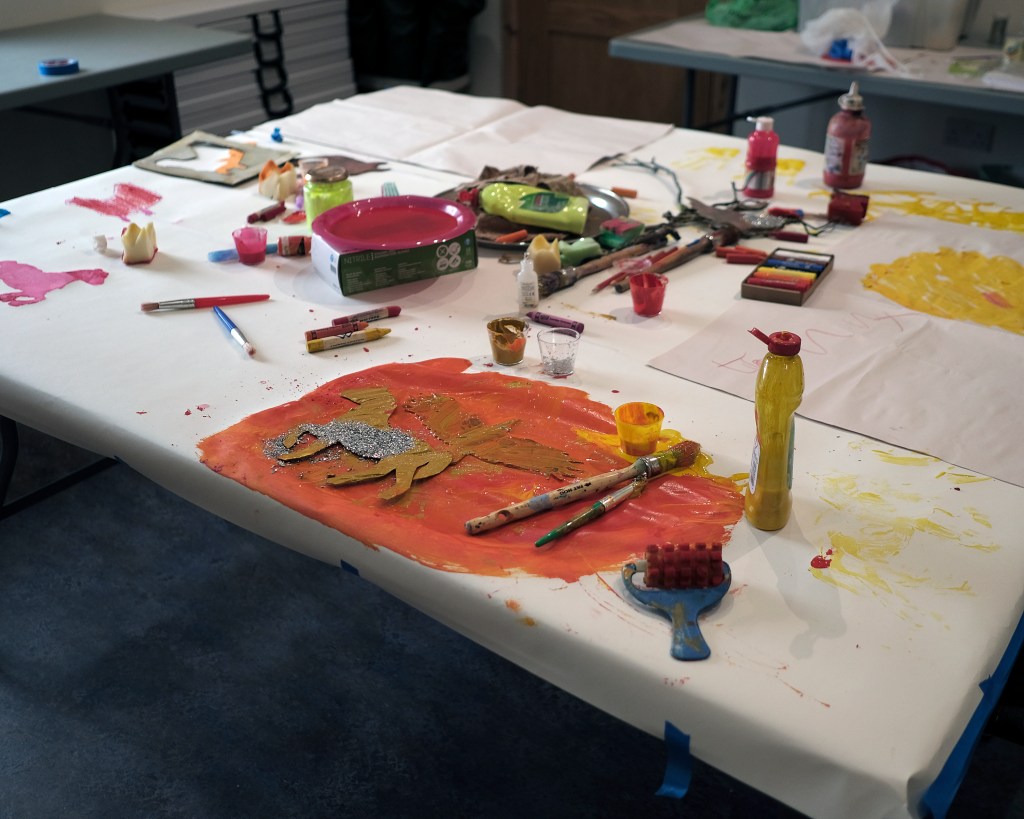
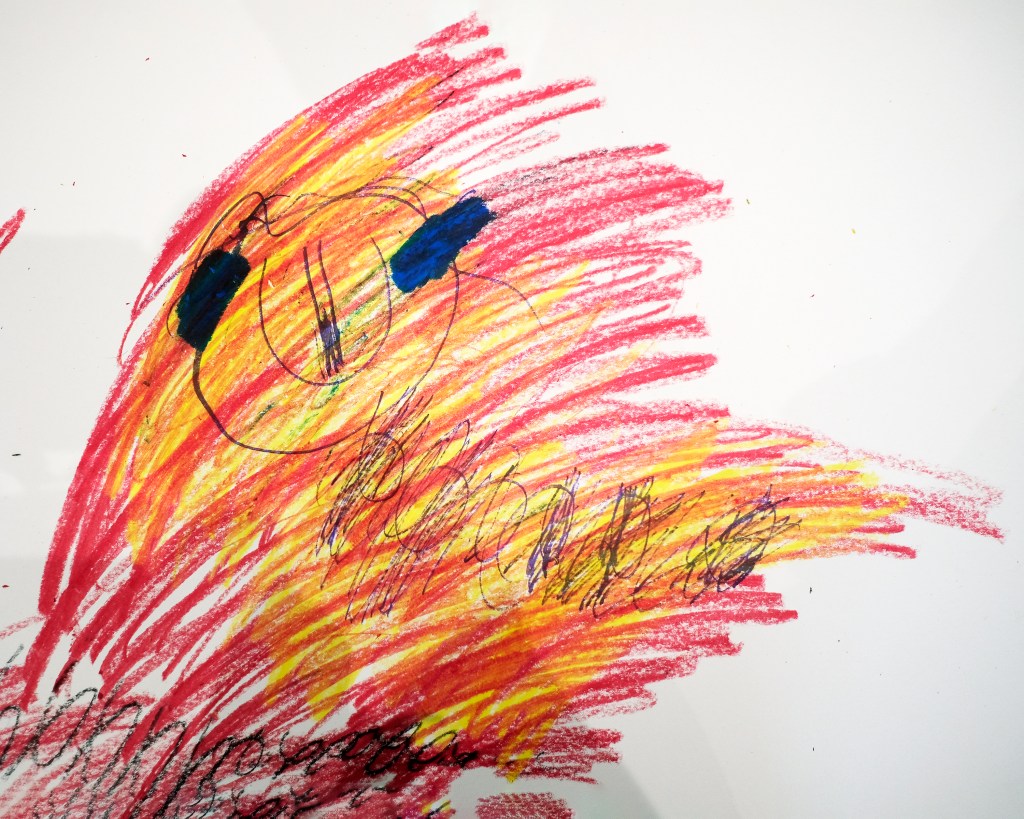
Collage is a new technique for the men, and it adds another layer of choice. I prepared some backgrounds for them to respond to, alongside cut out printed imagery that they could use to make collages. From there, they began building their own pieces — mixing the prepared images with drawing, painting and stencils. It felt important to introduce something new while still anchoring it in more familiar ways of working, so they could experiment without feeling overwhelmed.

There’s a noticeable shift happening. As this is new territory, I’ll be repeating the process in the next few sessions to help build familiarity and confidence. I’m trying to gently expand their visual language — introducing new techniques while encouraging the freedom to make spontaneous drawings and paintings. That sense of permission to play is starting to grow.

We’re working in the beautiful Activity Room at the Grimsay Community Association — a peaceful, well-equipped space that feels perfect for these workshops. The room has a calm energy to it, and I think that’s contributing to how comfortable everyone is beginning to feel. They clearly enjoyed walking in and seeing their work displayed — that quiet sense of pride matters.

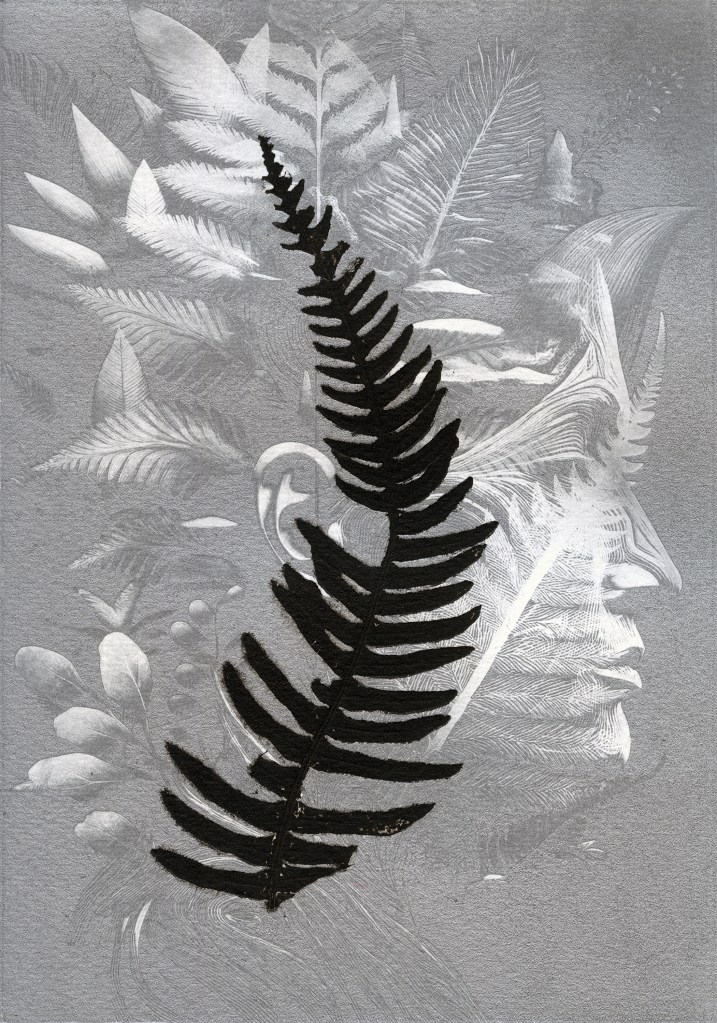
Untitled: A Tapestry of Connection Phase II
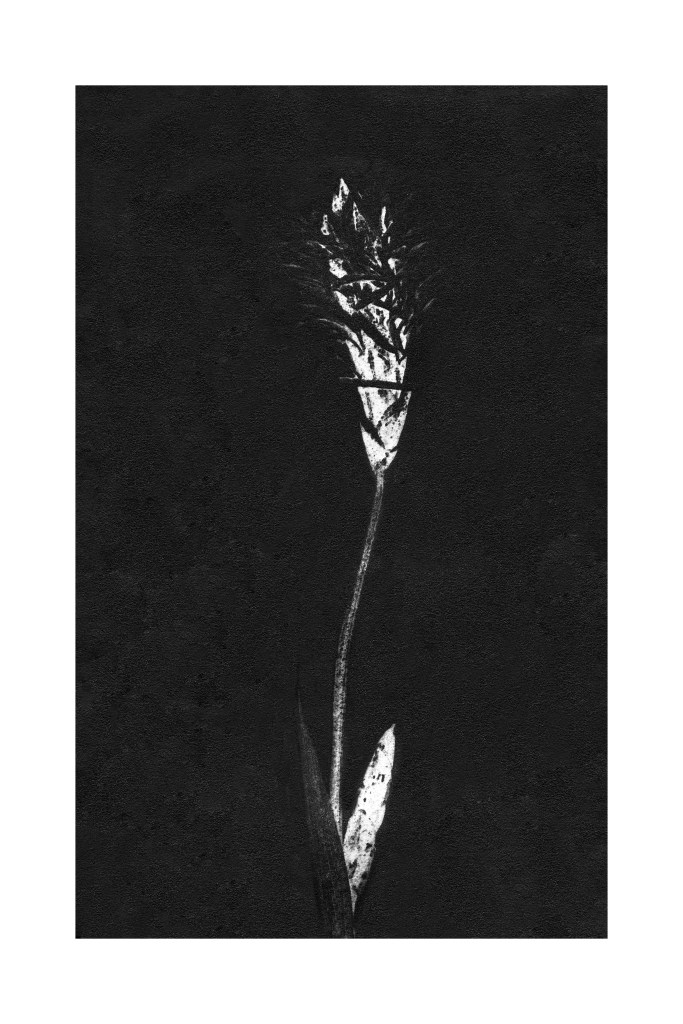
photopolymer gravure print with printed fern leaf

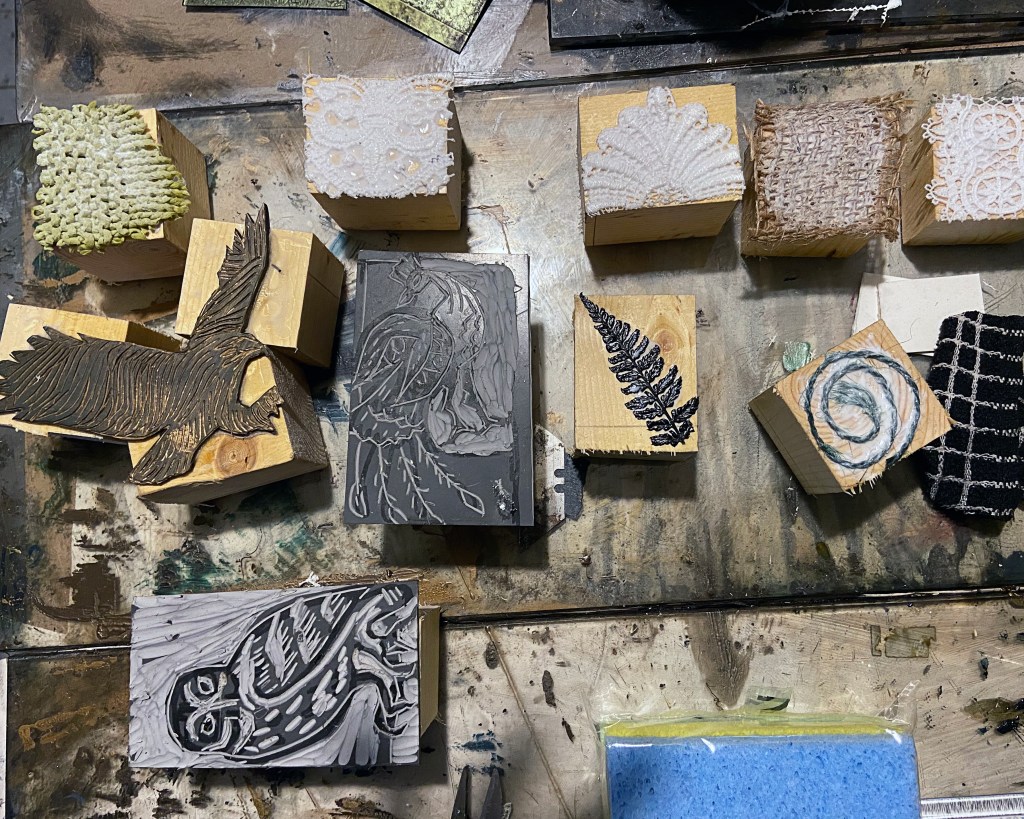
I’ve also started experimenting with some of my own photopolymer gravure printing processes, and I have a few exciting ideas brewing for where this could go next.

It feels like something is gently unfolding.

supported by Creative Scotland.

A Tapestry of Connection Phase II

Workshop session I Valentine’s Ice-Breaker

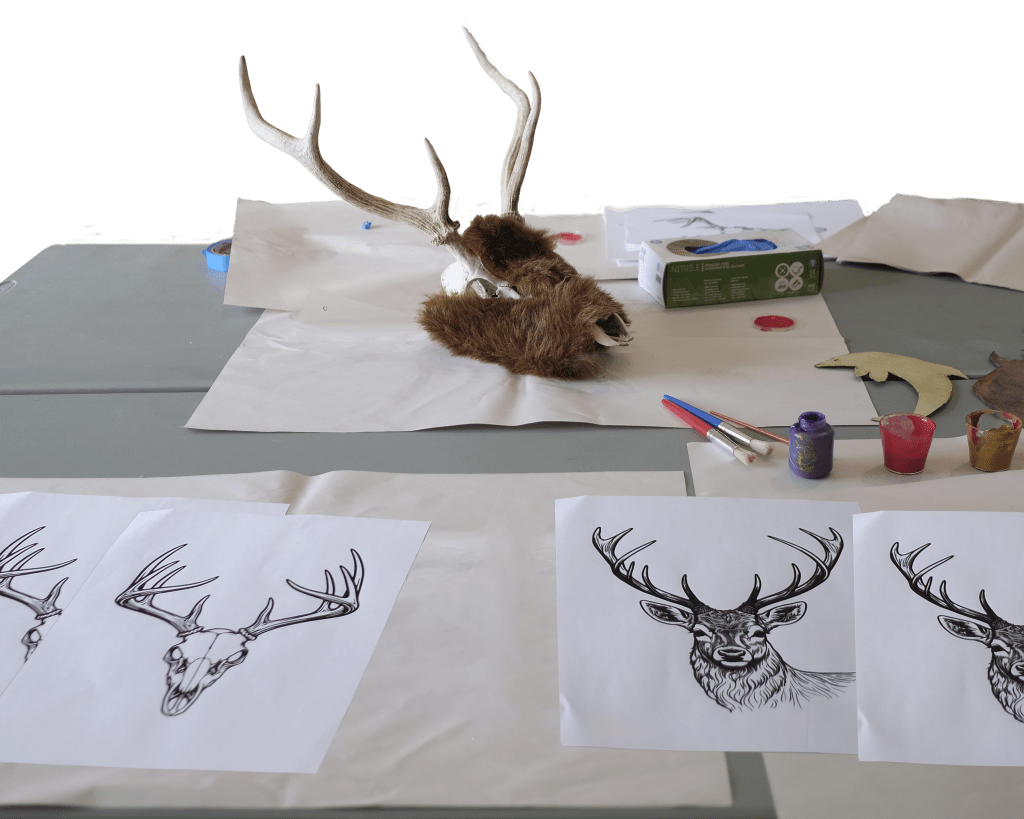
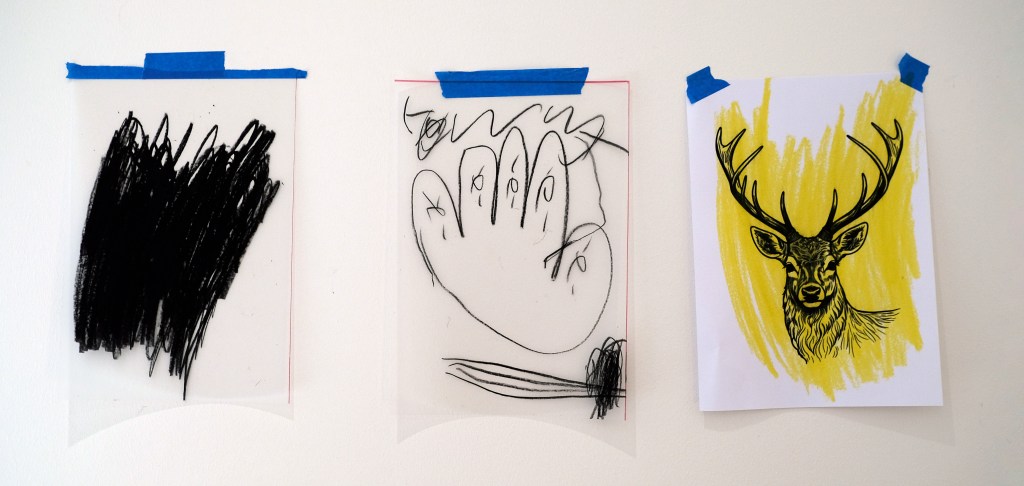
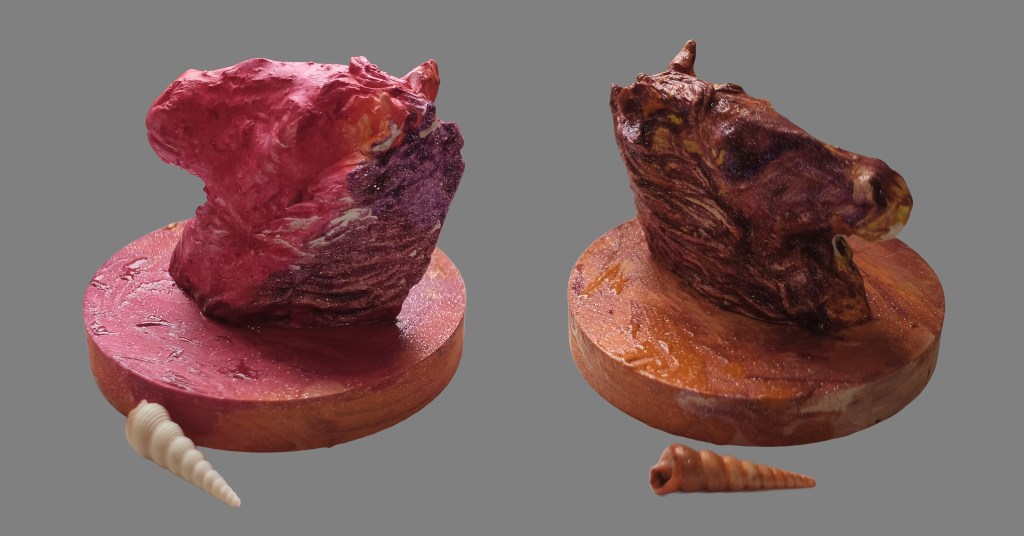
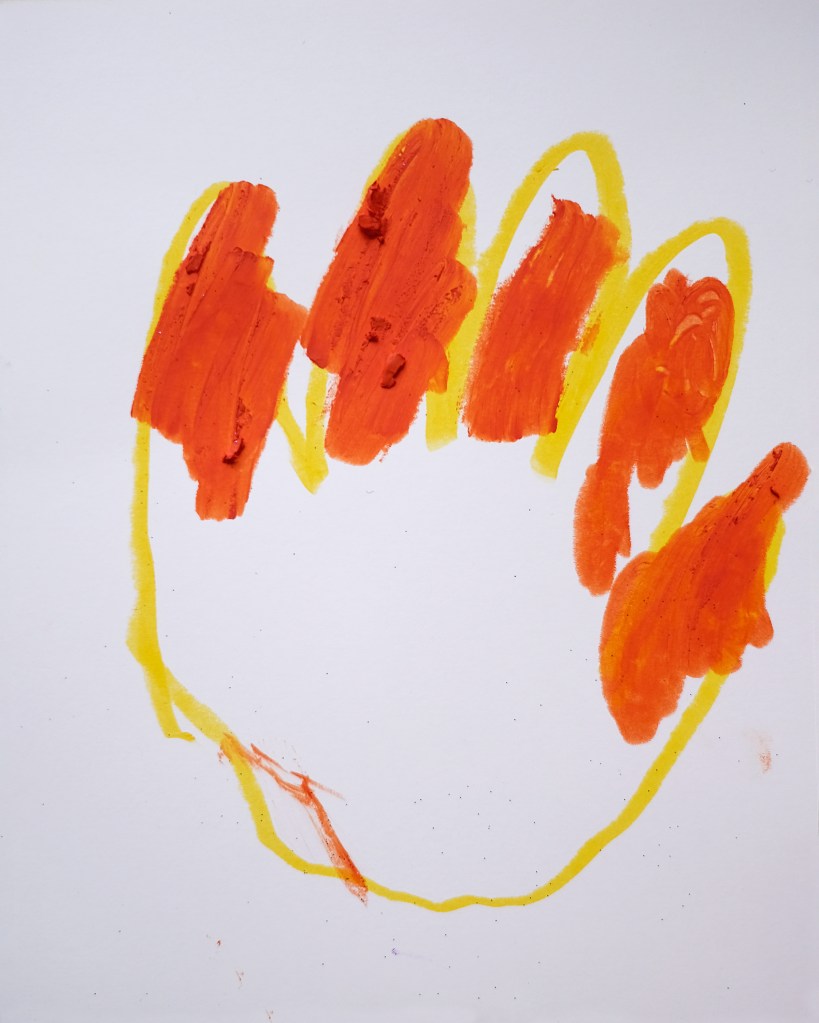
I began with a relaxed, Valentine’s-themed workshop, where participants painted plaster horse heads that I cast from a beach object (I think it was part of a dog toy). They also made some valentines cards using stencils and did some drawings. This was a light, confidence-building reintroduction to materials and mark-making class.

The session flowed really well, and it was lovely to see how focused and absorbed the guys became in their work. There was a calm, concentrated energy in the room as they worked with colour and texture. At the end, I hung some of the pieces on the wall so they’ll be able to see their work up when they arrive next week.

Massive thank you to the day care service providers from Craigard who support and help each of these workshops to run smoothly and safely 😊

supported by Creative Scotland.

A Tapestry of Connection Phase II

Clarity and Connection

I have recently completed and passed my online Safeguarding Adults (Level 1) course in order to better support my work with two adult autistic students. The training was extremely helpful in underlining the correct procedures to follow if I ever needed to report a concern or respond to a challenging situation. It reinforced how vital it is to act appropriately and within established guidelines, as failing to follow the correct procedures can seriously jeopardise both individuals and institutions. This is valuable knowledge that I believe is essential when working with vulnerable adults or in any role involving responsibility for others.

supported by an Open Fund award from Creative Scotland.

A Tapestry of Connection Phase II

Clarity and Connection

This blog marks the beginning of A Tapestry of Connection – Phase II: Clarity and Connection. This new phase grows directly from the original A Tapestry of Connection project, which was supported by VACMA and centred on a mile-long stretch of the Hebridean Way. The work explored human interaction within the landscape, observing how people move through, respond to and leave traces within their environment. Through this process, I experimented with photopolymer printing reflecting on both physical presence and quieter, less visible forms of connection.

Much of my studio work during the first phase was highly experimental, focusing on learning and testing photopolymer techniques and processes. Through sustained trial and error, I explored different approaches to exposure, mark-making and plate development. While this period of experimentation did not produce a large body of finished work, it was essential in building technical understanding. From this process, I was able to resolve one final image, which I developed into a small edition of prints.

Untitled: A Tapestry of Connection,
photopolymer gravure etching, with printed fern

Phase II builds directly on this foundation. The studio work moving forward will draw on the knowledge gained through this earlier experimentation, allowing me to work with greater confidence and intention as I push my photopolymer printing results further.

Deergrass
photopolymer gravure etching

A part of the first phase was working alongside two adult non-verbal autistic day care users. I developed and delivered two workshop sessions during this initial phase. The structure and focus of the workshops were informed by my prior fieldwork and observations within the setting, shaping how the sessions were approached and the kinds of activities explored. Across these initial workshop sessions, the work was largely observational, offering a valuable first insight into how the participants engage and respond. While these early sessions were informative, their limited number restricted the level of collaboration possible.

With the support of the Day Care Service, Craigard and a grant from Creative Scotland, the next phase will involve six workshops, allowing for more sustained engagement and a more collaborative way of working. I now have a clearer understanding of how the participants work and what they enjoy, this extended timeframe will enable the project to develop with greater depth and responsiveness.

This blog will act as a space to reflect on making, collaboration and the evolving relationships between people, place and print as this next phase unfolds.

supported by an Open Fund award from Creative Scotland.

A Tapestry of Connection Phase II: Clarity and Connection

I’m pleased to share that A Tapestry of Connection Phase II: Clarity and Connection will officially begin in February, supported by a Creative Scotland Open Fund: Individuals award.

This next phase focuses on community connection, clarity, and place through material-led practice. As part of the project, I will be preparing and leading six collaborative workshops with two adult non-verbal autistic service users, exploring perception, engagement, and creativity together.

The work will incorporate photopolymer printmaking, alongside other material processes, allowing participants and myself to translate experiences of place, touch, and environment into layered visual forms. Updates, reflections, and images from the workshops and subsequent studio work will be shared here as the project progresses.

With support from Creative Scotland.

A Tapestry of Connection

This project has been an absolutely fantastic learning opportunity for me, and as I write this, I realise it’s the final blog post in this series. It has truly opened up so many new avenues.

While not all prints I made achieved the desired outcome, the process itself was a profound learning experience. I pushed the boundaries of my practice, gaining confidence in combining various artistic techniques.

The support from the VACMA Scotland bursary played a crucial role in the successful execution of the A Tapestry of Connection project by providing a material budget that facilitated extensive exploration and experimentation. The learning curve was notably steep, particularly with the precise nature of the photopolymer process, which necessitated numerous tests and adjustments

My fieldwork was a particular highlight, blessed with perfect weather – sunny and warm throughout. This ideal environment allowed me to make excellent connections with the eco-walkers, who generously let me photograph them. I learned so much about the locale, its rich traditions, the unique character of the place, and especially about the diverse plant life thriving on the bog moorland. This firsthand experience was invaluable in informing my artistic practice.

I can confidently say that I managed to achieve everything I set out to do. While there were certainly a lot of technical hurdles to overcome, perseverance paid off. The culmination of all this effort is a single, image, from which I’ve been able to create a small edition. This project truly pushed me to explore a new way of making my prints, challenging my previous methods and fostering a significant artistic evolution.

A Tapestry of Connection

The past couple of weeks have been a whirlwind of activity, culminating in the conclusion of my fieldwork research. Just as I wrapped up this significant chapter, the weather decided to mirror the intensity of my schedule. We’ve transitioned from an extreme dry and hot spring to a dramatic shift marked by torrential rainstorms and fierce winds reaching up to 60 mph.

I have now successfully conducted the two workshops for service users from the Day Care centre in Lionacleit, these were held in the lovely workspace at Ceann na h-Àirigh (Grimsay Community Association). These sessions focused on mark-making techniques using stencils and simple printing processes, fostering creativity among participants. We explored various artistic expressions together, and I am eager to continue collaborating with these students in future projects.

I have begun planning and crafting images for my photopolymer gravure prints. These prints will be inspired by and made with the collected materials, photographs and drawings I gathered during my fieldwork research. Today marks an exciting milestone as I prepare to pull some of these prints, transforming ideas into tangible artworks.

A Tapestry of Connection

Day Twenty 23 05 25


View looking out to Lochmaddy – Beinn Lì (Ben Lee) is the hill on the left of this photograph 12.30 PM

12.30 pm, on my last walking day of on-site field work research for my project “A Tapestry of Connection”. I turned up the path towards Blathaisbhal hill and was greeted by a cuckoo perched on a post, its presence as clear as day. I’ve been serenaded by its distinctive call on several walks, but today it decided to make a more personal appearance. This pretty little migratory bird only sings its signature tune when breeding, and I felt privileged to witness it. It’s amazing to think that this bird has flown all the way from East Africa, where it maintains a more subdued tone. The Common Cuckoo are known for their unique breeding habits – they are brood parasites. They lay their eggs in the nests of other birds, which then raise the cuckoo chicks as their own.

references
  • Cuckoo Facts. – The RSPB
  • Common Cuckoo. – BirdLife International
  • Migration Patterns of the Common Cuckoo -National Geographic
  • Brood Parasitism in Birds. – Encyclopedia Britannica
  • Cuckoo Breeding Habits. – BBC Wildlife

I continued my walk, I looked up to see the sea eagle soaring above me once again – I’m thrilled to have had this encounter.

As I reflect on my month-long journey in one of the hottest springs on record, I noticed a significant transformation in this peaty boggy landscape. Initially, the ground was wet and boggy, necessitating the use of wellingtons due to the saturated terrain. However, as the days passed, I observed that the landscape began to dehydrate, with the tips of the heather drying out and the pathways becoming parched.

The drying out of heather tips is also a notable indicator of the changing environmental conditions. Heather, a plant commonly found in peatland ecosystems, is sensitive to moisture levels. Studies have shown that drought stress can lead to a decline in heather health and productivity.

reference
  • Impacts of drought on heather moorland – Journal of Ecology

I finish my mile-long walk and notice the temperature dropping and a few drops of rain starting to fall. The dry and warm weather we’ve been experiencing has been lovely, but I’m glad to see some much-needed rain finally arriving.

This was the last day of my month long research of the mile-long walk along the Hebridean way. This has not just been a physical endeavour; it has been a reflective exploration of the intricate dynamics between eco-tourism and sustainable environments.

spotted:
  • Two swans
  • An oyster catcher
  • A heron
  • A shelduck
  • A cuckoo
  • A sea eagle

In response to my experiences along the Hebridean Way, I will now dedicate a month in my studio to creating photopolymer etchings. This time allows me to reflect on the landscape and emotions I encountered during my journey, translating them into intricate artworks that reflect upon the nature of this experience. I aim to make weekly blog progress reports…

A Tapestry of Connection

Day Nineteen 22 05 25

View looking out to Lochmaddy – Beinn Lì (Ben Lee) is the hill on the left of this photograph 1 PM
Anonymous English walkers

I sat on my designated sitting spot, I couldn’t help but notice the dry and warm weather slowly giving way to a cooler atmosphere. I spent the day engrossed in drawing. Two English middle-aged walkers strolled by, their eyes fixed on the path ahead. Their demeanour was somewhat aloof, and although they consented to having their photograph taken from behind as they walked away, their reluctance to engage in conversation was palpable.

It was as if they were on a mission to traverse the Hebridean Way without being sidetracked by human interaction. I couldn’t help but ponder whether this was a characteristic trait of theirs or if they were simply having a bad day?

photo by John Kippin

In an era where long-distance hiking is gaining popularity, it’s intriguing to observe how different cultures interact with one another along these trails.

spotted:
  • A sea eagle

A Tapestry of Connection

Day Eighteen 21 05 25

View looking out to Lochmaddy – Beinn Lì (Ben Lee) is the hill on the left of this photograph 6 PM

I set out for my walk on this Wednesday evening, it was lovely and sunny, although the temperature had dropped a little compared to the last few days. The blue sky was still visible, with some interesting and puffy clouds starting to build.

Marco

Right at the beginning of my walk, I met Marco, a hiker from the Netherlands. He told me that he had walked from Land’s End in Cornwall, a journey that had taken him 7 weeks so far. Marco mentioned that during his trek, it had only rained twice. This is not ideal, as Spring and early Summer usually have more rain and are not typically this warm. This unusual dry and hot weather could potentially be linked to climate change.

Marco shared with me that his wife had met him as he crossed over into Scotland from England, just to spend some quality time with him and ensure he hadn’t become too worn out from his journey. I was impressed by his determination and grateful that he let me take his photograph.

Moira and Poppy her dog

The Hebridean Way is more than just a hiking trail; it’s a vital part of the local community and a reflection of the region’s unique culture and natural beauty. As I continued to explore this trail, I’m reminded that this trail is not just for hikers but also for residents like Moira and Poppy who regularly walk on this section.

I was thrilled to spot the sea eagle again – only one this time, but most likely to be one of the same pair that I saw yesterday. As I watched it soar into the horizon, I couldn’t help but feel a sense of awe at its majesty. I watched it through my binoculars and was able to observe this magnificent bird up close as it flew away.

Cloud over Blathaisbhal hill
Na Fir Bhreige (The False Men) located on the slopes of Blathaisbhal hill. 
These stones are said to be the graves of spies who were buried alive, or possibly the result of a witch’s curse.
spotted:
  • Two swans
  • An oyster catcher
  • A sea eagle

A Tapestry of Connection

Day Seventeen 20 05 25

View looking out to Lochmaddy – Beinn Lì (Ben Lee) is the hill on the left of this photograph 12.30 PM

Tuesday, 12.30 PM. The weather has been unusually hot and dry for several consecutive days, a pattern that raises concerns about climate variability and its effects on local ecosystems. The sky is a brilliant blue, punctuated only by a few wispy clouds hovering over the hills, creating a stark contrast against the intense sunlight.

The environment feels particularly quiet today; there are no skylarks singing, which adds to the serene yet eerie atmosphere. I wonder if these birds have changed their behaviour due to the weather?

There is minimal traffic — only one car has passed by so far, with another visible in the distance. In the background, there’s a faint sound of an airplane flying high above.

Southern Hawker (Aeshna cyanea) dragonfly

In today’s remarkable quiet, the sounds of insects became incredibly clear. The absence of wind enabled me to get a better look at the insects, I even took a photograph of a Southern Hawker (Aeshna cyanea) dragonfly (seen in photo above).

I also spotted

  • A red admirable butterfly
  • A bee
  • and other insects and little beetles that I have yet to identify
Sundew- Drosera Spatulata

I came across a plant that is so small I almost overlooked it – the Drosera spatulata, commonly known as the Spoon-leaved Sundew. It’s a small, unassuming beauty, that I thought was a a moss flower. What truly makes it stand out are the numerous tiny, hair-like tentacles covering the surface of each leaf. These tentacles glisten with what looks like morning dew, but it’s actually a sticky, sugary mucilage that serves a crucial purpose in its survival.

This is a carnivorous plant that thrives in this habitat which is moist and boggy. The sticky mucilage on its tentacles act as a natural flypaper. When a small insect, lands on a leaf, it becomes immediately stuck. The plant then responds to the struggling prey. The tentacles surrounding the trapped insect slowly bend inwards, bringing more mucilage glands into contact with the victim.

Once the insect is immobilised, the glands on the tentacles release digestive enzymes. These enzymes break down the soft tissues of the insect, allowing the plant to absorb the vital nutrients that are scarce in its natural soil environment. The amazing life of plants!

references
  • Royal Botanic Gardens, Kew. Drosera spatulata Labill – Plants of the World Online
  • International Carnivorous Plant Society. About Carnivorous Plants – International Carnivorous Plant Society
  • University of Wisconsin-Madison, Botany Department. Carnivorous Plants. -University of Wisconsin-Madison

This was a gorgeous walk – High above, commanding the vast expanse of the sky, were two magnificent White-tailed Eagles, also known as Sea Eagles (Haliaeetus albicilla). Their immense size was immediately apparent; these are the largest eagles in the United Kingdom and Europe, with an impressive wingspan that can reach up to 2.5 meters (8 feet).

Watching them soar effortlessly, their broad, rectangular wings catching the light, was an exhilarating experience. They moved with such power and grace, truly owning their aerial domain as powerful hunters. As one banked, I caught a clear glimpse of its distinctive white, wedge-shaped tail – a hallmark feature of the adult White-tailed Eagle. It was just a flash, but enough to confirm their identity and leave me in awe.

sea eagle in the sky

I managed to snap a photo, though it’s more of a ‘spot’ than a detailed shot. Clearly, it’s time for me to invest in a telephoto lens for my camera to truly capture the majesty of such encounters! The sheer thrill of seeing these powerful raptors in their natural element, demonstrating their majestic flight, is unforgettable.

Most instances where Sea Eagles are observed near lambs involve scavenging. Eagles are highly opportunistic and will readily feed on carrion. This means they may be seen feeding on lambs that have already died from other causes, such as exposure, disease, or complications during birth. They might also take very weak, stillborn, or dying lambs that are already compromised and unable to defend themselves or escape. Healthy, mobile lambs, especially those under the watchful eye of a ewe, are not typical prey for Sea Eagles due to the energy expenditure required for a successful hunt and the risk of injury.

references
  • White-tailed Eagles and Livestock – Forestry and Land Scotland
  • White-tailed Eagles and Livestock – RSPB Scotland
  • White-tailed Eagles and Lambs – Isle of Mull Eagle Watch
  • White-tailed Eagle – RSPB

A Tapestry of Connection

Day Sixteen 19 05 25

Open Country style audio recording of my walk on the 19 05 25
View looking out to Lochmaddy – Beinn Lì (Ben Lee) is the hill on the left of this photograph 11.30 AM

In my explorations of the moors, I’ve observed two distinct species of cotton grass flourishing in the landscape: Hare’s Tail Cottongrass (Eriophorum vaginatum) and Common Cottongrass (Eriophorum angustifolium). These species are notable for their unique characteristics and ecological significance. The Uist’s landscape is perfect for this plant with its extensive blanket bogs, heaths, and moorland, which provides suitable habitats for both cottongrass species. 

Hare’s tail cottongrass (Eriophorum vaginatum): This species is known for its single, upright seed head, which resembles a hare’s tail. It is typically found in damp moorland and blanket bog habitats. 

Common cottongrass (Eriophorum angustifolium):This species is distinguished by having multiple seed heads on each plant. It also prefers damp, acidic environments like bogs and heaths. 

Both species are integral to maintaining the health of moor ecosystems, contributing not only to biodiversity but also to soil health and water regulation. Their presence indicates a well-functioning ecosystem that supports a variety of flora and fauna.

References
  • “Eriophorum vaginatum – Hare’s-tail Cotton-grass.” Wildlife Trusts
  • “Eriophorum angustifolium – Common Cotton-grass.” Plantlife
Frances

I was just thinking that I wouldn’t meet anyone today and then on my way back I came across Frances, who graciously allowed me to take her photograph. She is the first woman I have met on this journey so far.

Frances shared her passion for walking and mentioned that she has enjoyed various walks in New Zealand. Now that her children are grown, she is looking forward to exploring more walking trails in the UK. This newfound freedom allows her to embrace her love for nature and adventure without the responsibilities that once held her back.

Frances also also mentioned her friend who isn’t as enthusiastic about walking. This friend meets up with Frances after she completes her day’s walk, this allows Frances to enjoy her time outdoors without feeling burdened by too much baggage.

Internet tower
Na Fir Bhreige (The False Men) located on the slopes of Blathaisbhal hill. 
These stones are said to be the graves of spies who were buried alive, or possibly the result of a witch’s curse.