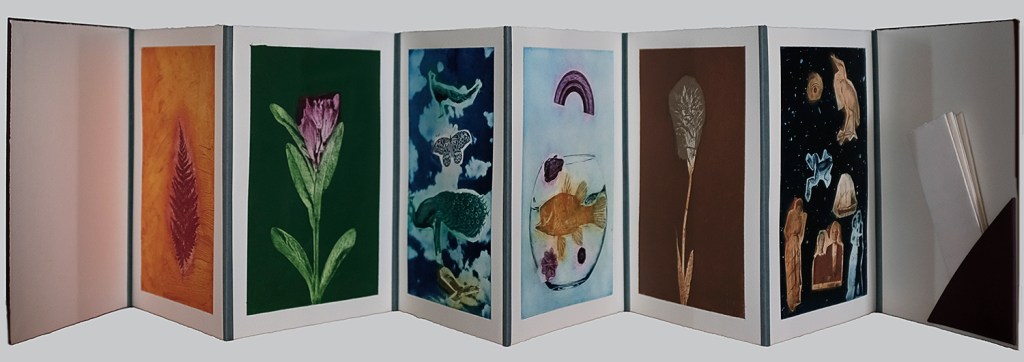
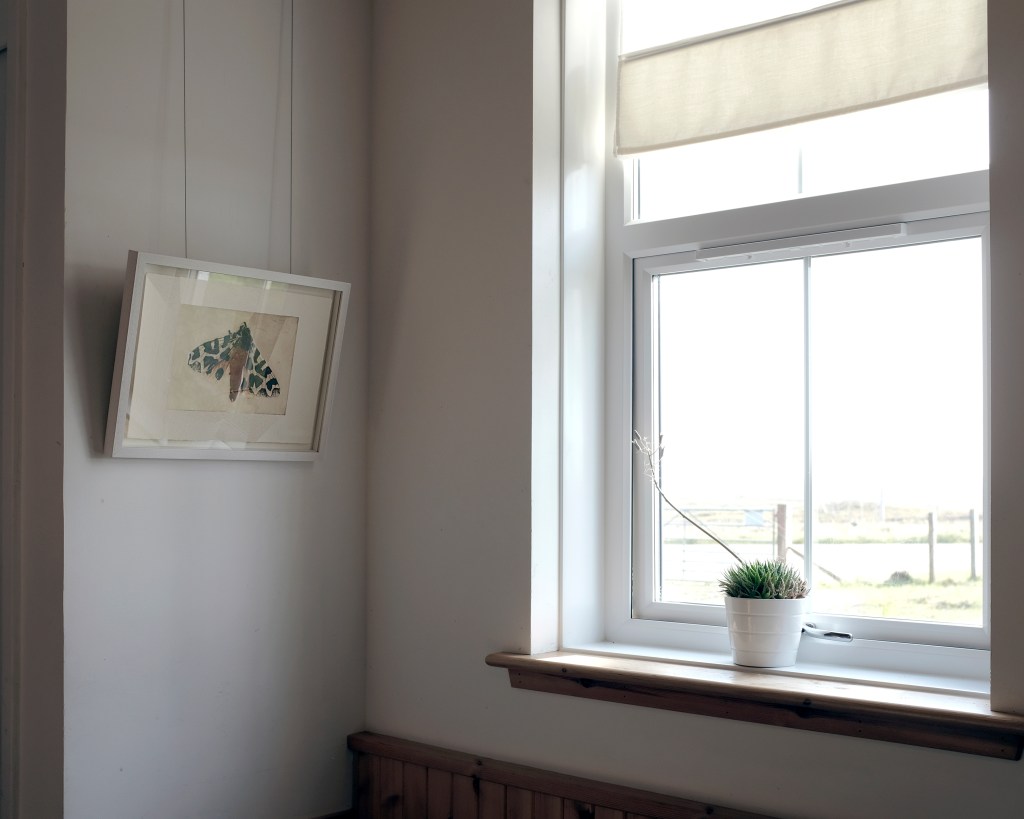
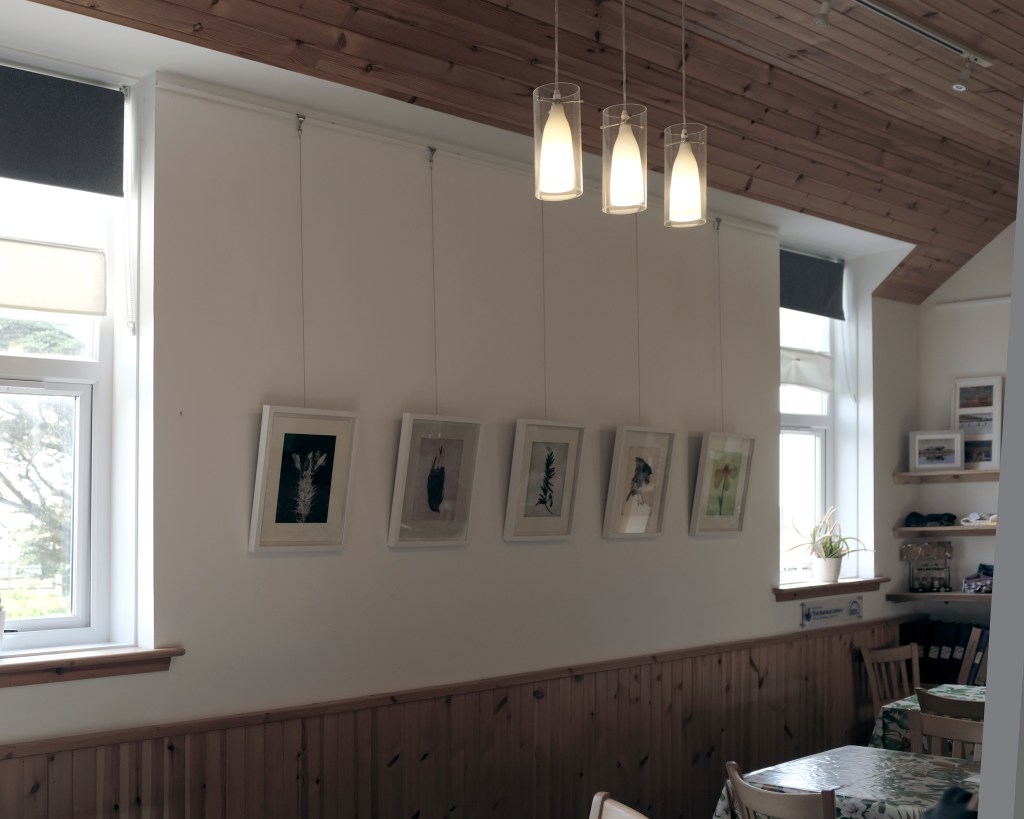
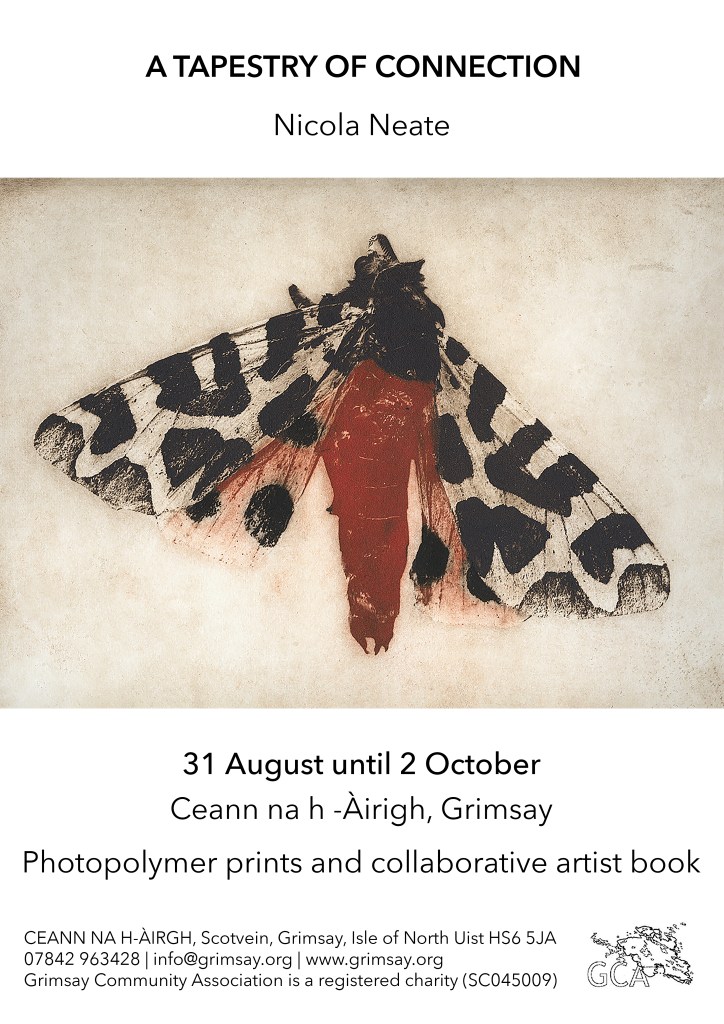
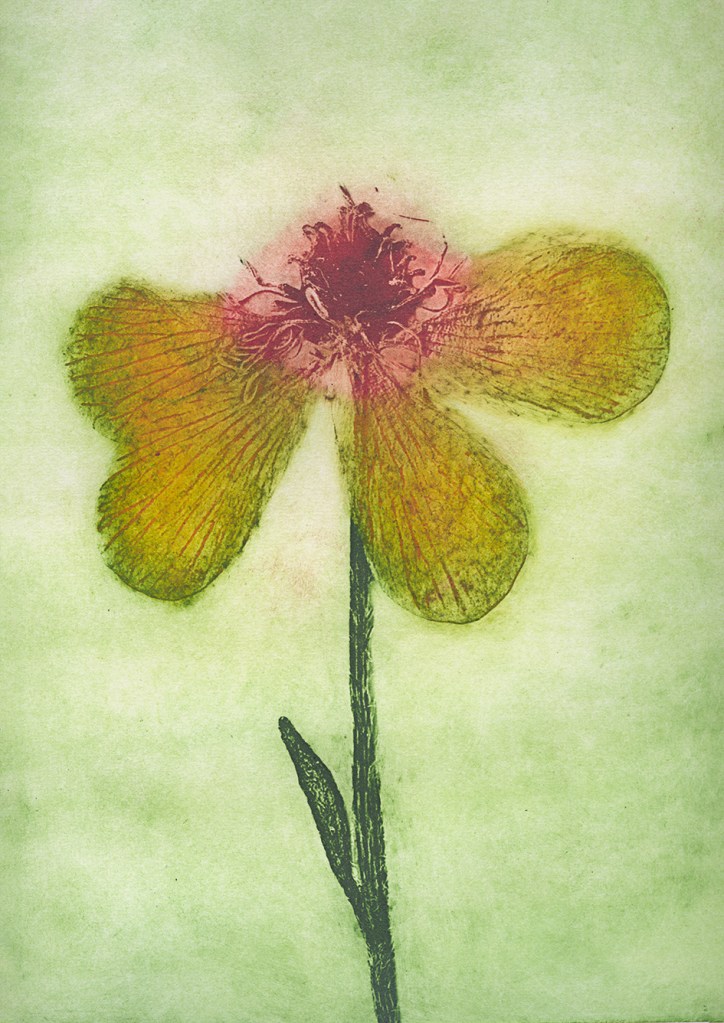
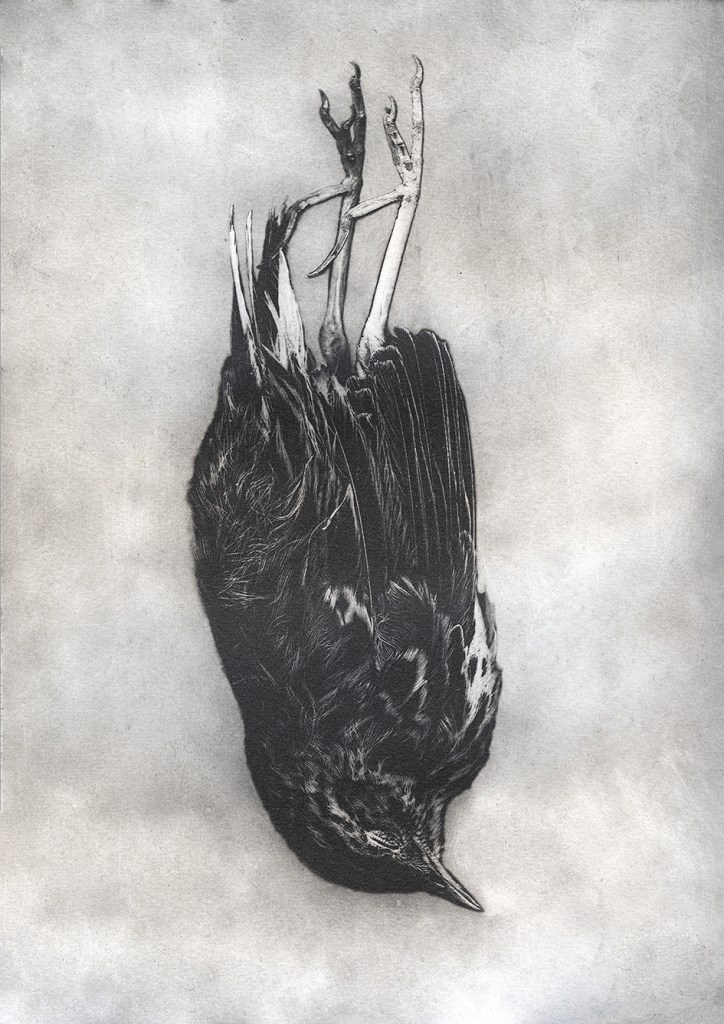
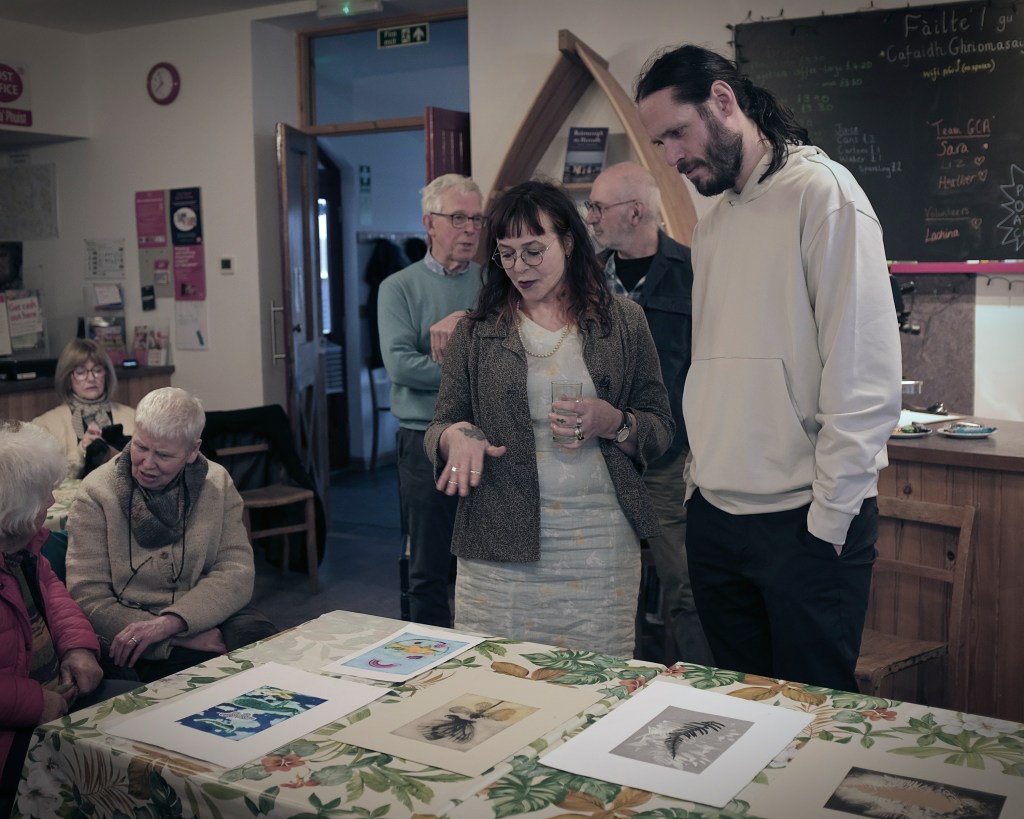
I have a display of my photopolymer prints on show at Grimsay Community Association. The work comes from A Tapestry of Connection, exploring the landscape, ecology and small details of North Uist. Also on display is the collaborative concertina artist’s book made during the project with Sollas Bookbinding.
Putting this small display up at Grimsay Community Association feels like a quiet but important way to bring this part of A Tapestry of Connection to a close. This is where I held the community workshops with the day care centre, so it feels right to bring the work back into the same space and share some of what grew from those sessions. I’ve also had some really lovely feedback from people who have seen the exhibition, which has meant a lot. For me, showing the work locally is part of the project too.
Next week I head back to Highland Print Studio to expose more photopolymer plates and begin developing the next stage of the work. This new project will grow from A Tapestry of Connection, but I want to take it further — I want to experiment — working on some larger pieces, digging deeper into the ideas and becoming more ambitious with the process. I’m excited to see where this next stage leads and feel ready to push the work further.
This space between projects is the time I use for putting work out, reflecting on what I have made, and preparing for what comes next.
I have organised a small local exhibition, A Tapestry of Connection, opening at Ceann na h-Àirigh in Grimsay at the end of August. This was the site where I delivered all the project workshops, so it feels fitting to return the work there and share the outcomes with the community involved. The exhibition also offers a natural point to close this phase of the project before moving on to the next stage. Much of my practice begins with looking closely at the landscape around me, so being able to share the resulting work within that same community feels particularly meaningful.
Alongside preparing for the exhibition, I have also been putting my work forward for other opportunities. I exhibited a couple of my prints in the Uist Artists Association Summer Show, and as a result I have been invited to be one of the artists representing the organisation in the Highland Art Prize. It is good to see my work being shown in different contexts, get some feedback and have opportunities come from simply putting it out there.
I am planning a trip to Inverness and Highland Print Studio in the next couple of weeks, where I can continue exploring some of the ideas that have been developing in the background. I’m waiting for some new polymer plates to arrive before I make the trip. Unfortunately, the recent extreme heat in the south has delayed their delivery. The plates are sensitive to high temperatures and need to be transported in cooler conditions, so I am now waiting for the weather to settle before they can be sent north.
There are new images being prepared, materials waiting to arrive, exhibitions being applied for, prints being made and work from the previous project being shared. It is a period of pushing my work out while, at the same time, quietly preparing to move on -gathering momentum.
There is a misconception that an artist’s work begins and ends with a funded project. These in-between periods are often where the next steps begin to form.
Following the completion of A Tapestry of Connection, I’ve been taking time to reflect on the direction of my work and where I want to focus my energy over the coming months.
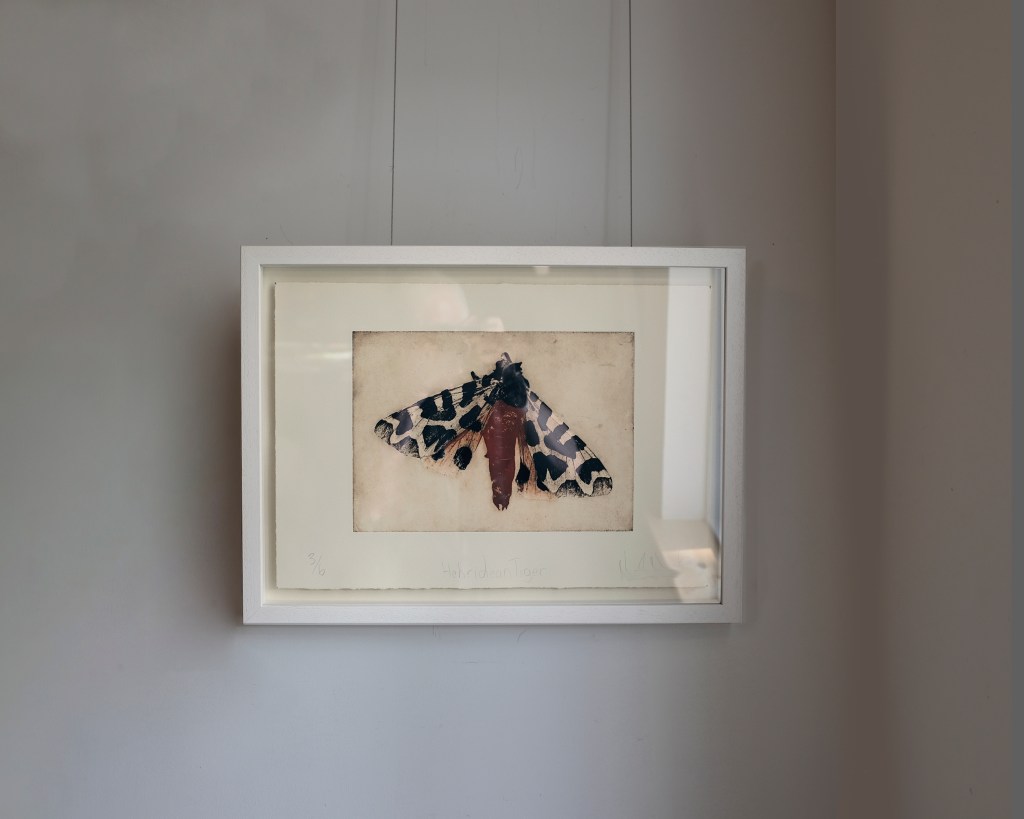
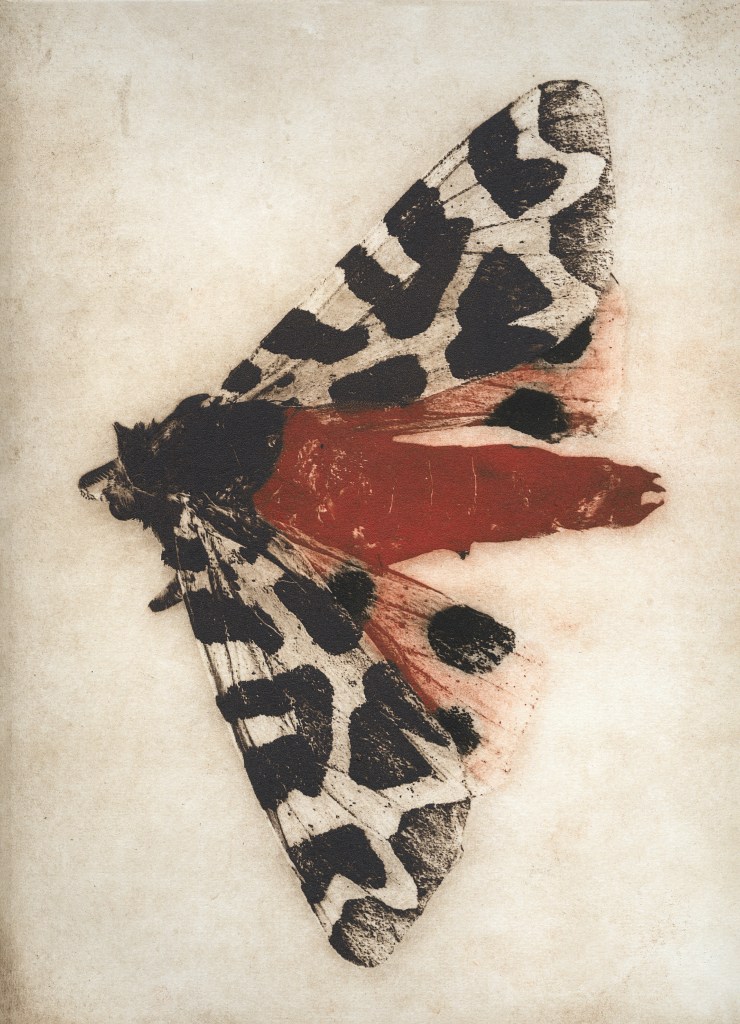
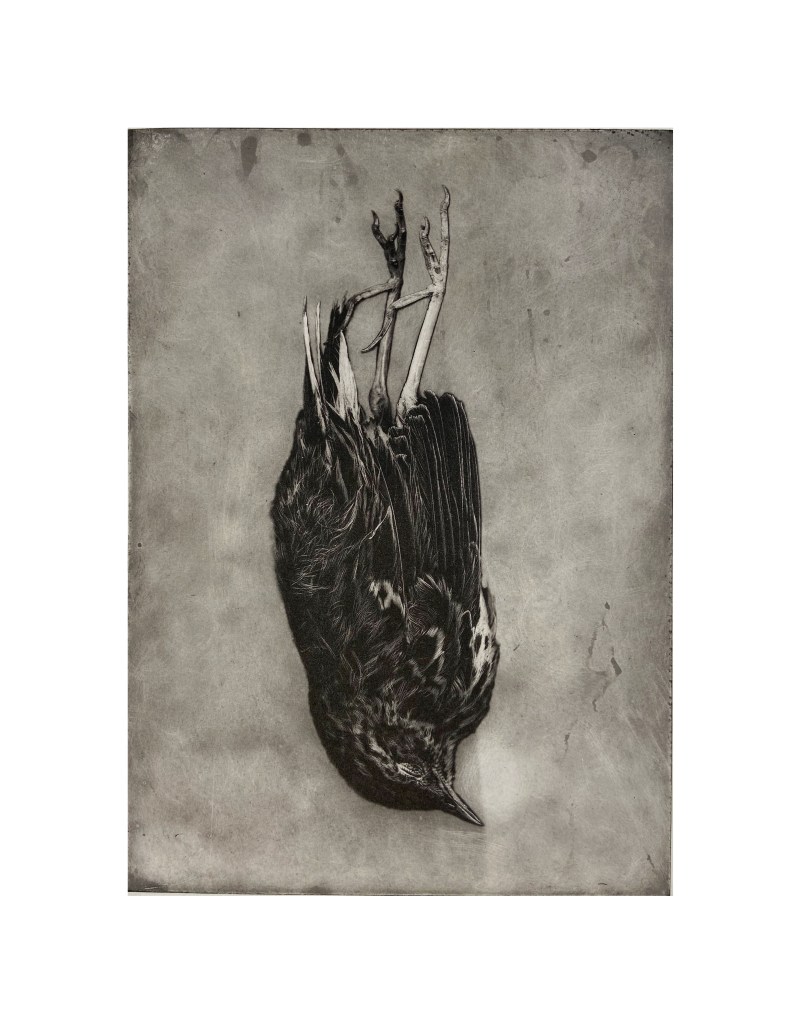
Hebridean Tiger
That thinking has brought me back to the studio.
I’ve been preparing a new set of acetates to take to Highland Print Studio. My focus is on developing my photopolymer work further, pushing the process beyond where it has taken me so far – making this an opportunity to experiment, and deepen my understanding of the relationship between image, material and print.
Away from the studio, I’ve been preparing for a local exhibition of my work, where I’ll also be showing the collaborative artist book A Tapestry of Connection. It feels right to bring the project back to the community that shaped it. I’ll share dates and details soon.
Getting ready for an exhibition also brings practical things into focus. Framing prints is one of those necessary costs that often goes unmentioned, but it’s an important part of presenting the work properly. It’s all part of the process, even if it happens quietly in the background.
I’m also pleased to be contributing an editioned print to Highland Print Studio‘s 20:20 Box. Printmaking can be a solitary process, so it’s rewarding to be part of a wider community of artists connected through a shared commitment to the medium.
Although I’m not currently working within a funded project, the work continues — walking, collecting, looking, printing, and thinking. This quieter period is not empty; it is contemplative, and new ideas are beginning to take shape.
As A Tapestry of Connection comes to the end of its Creative Scotland supported phase, I have found myself reflecting on just how much this project has evolved over the past year. What began in April last year with initial VACMA support has developed into something far richer, broader, and more connected than I could have imagined.
Phase II of this project became increasingly centred around connection, participation, and shared creative experiences, particularly through working alongside two non-verbal autistic adults. Spending time together making, observing, and communicating in different ways shaped the direction of the work profoundly. The project became not only about producing artwork, but about creating space for exchange, trust, and collaborative experience.
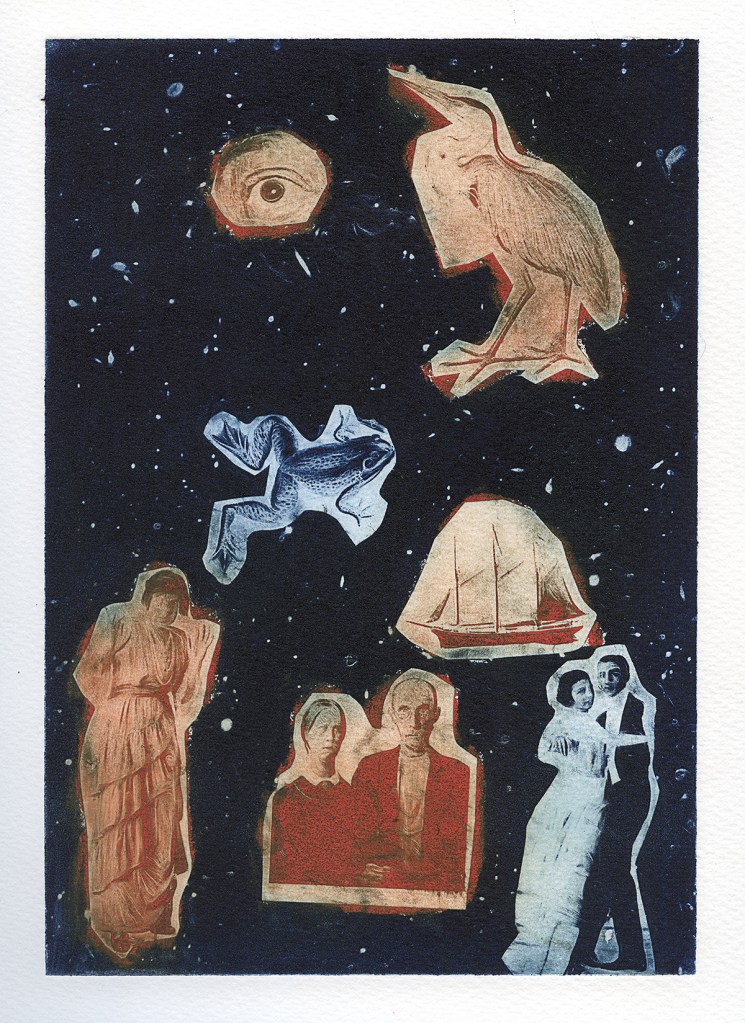
book insertindividual photopolymer prints/pages from the concertina book
I became a member of Highland Print Studio, where I was able to spend concentrated time exploring and refining my photopolymer printmaking techniques.
The final stages of the project brought another important collaboration through working with Corinna at Sollas Bookbinding. Bringing together the prints, collaborative imagery, and collected material into artist books felt like the natural culmination of the project. The process of constructing the books quite literally mirrored the ideas behind A Tapestry of Connection — pulling together different threads, experiences, people, and processes into one connected whole.
Looking back, this project has been an enormous learning journey. It has expanded my technical skills, and opened up new ways of thinking about collaboration, socially engaged practice, and printmaking. Along the way I have met and worked with many generous, talented, and inspiring people, forming new friendships and creative connections.
Work in Progress: Larger Photopolymer Prints
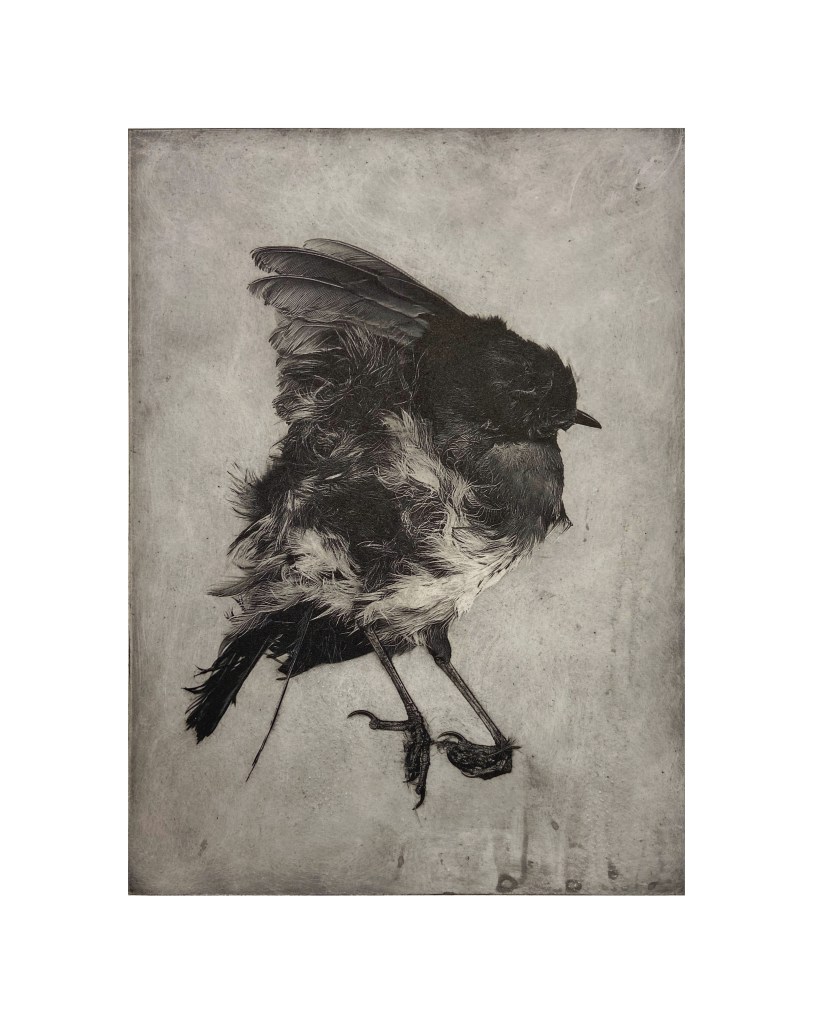
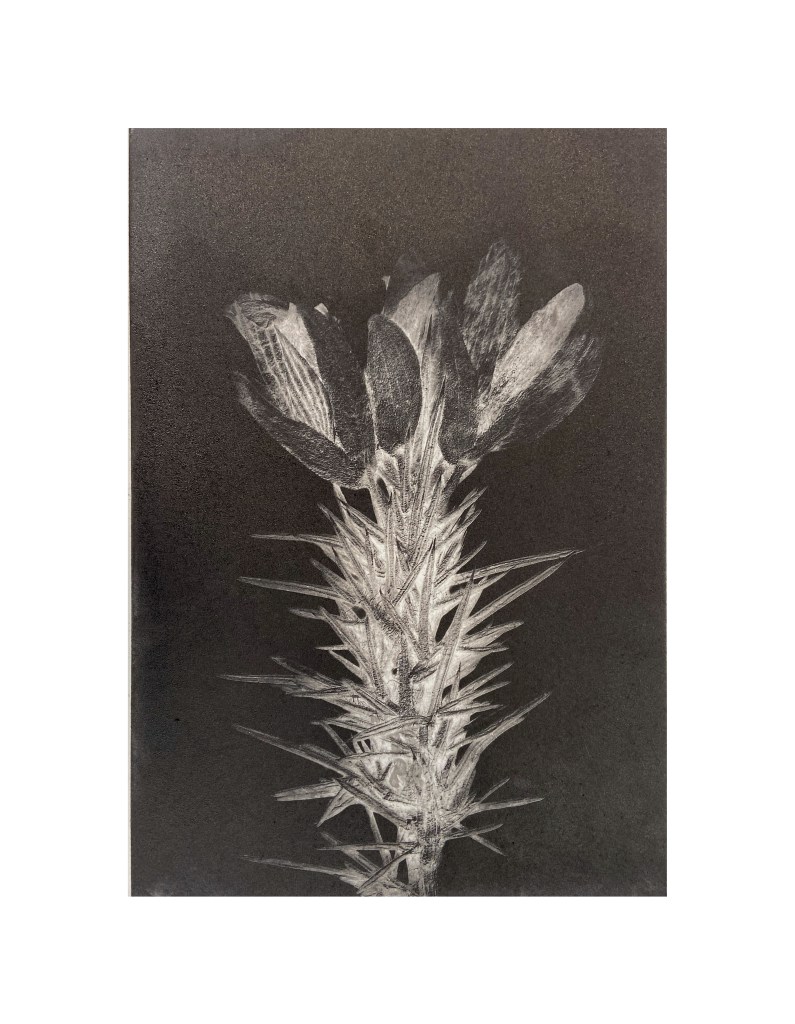
21 x29,7 cm21 x29,7 cm21 x29,7 cmwork in progress – larger photopolymer prints
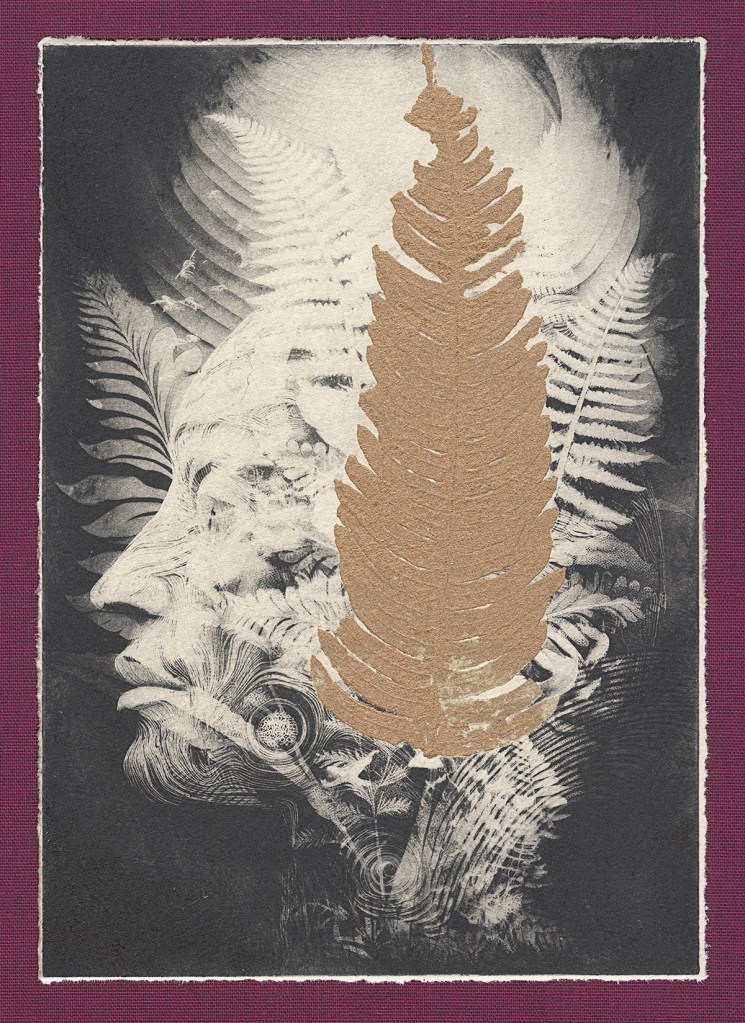
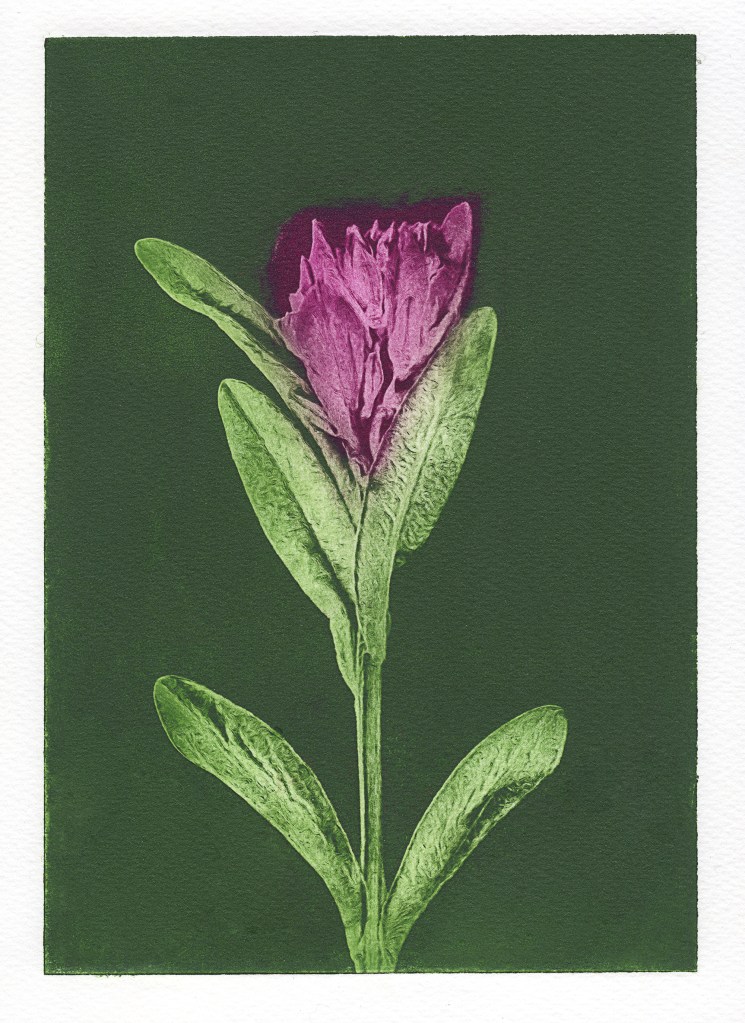
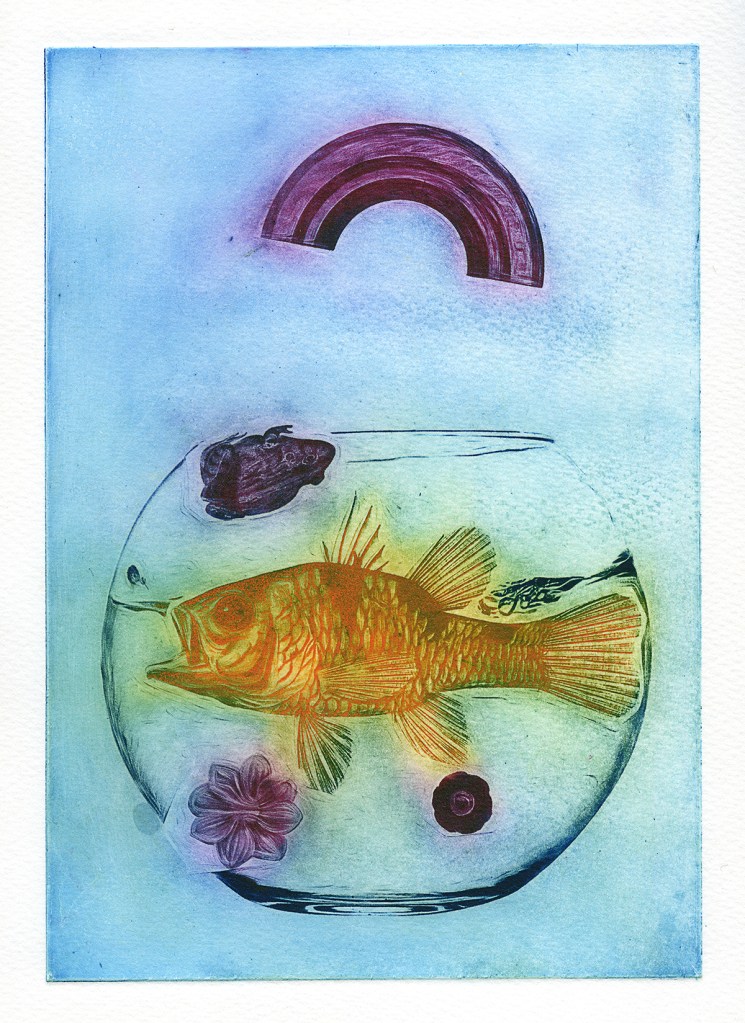
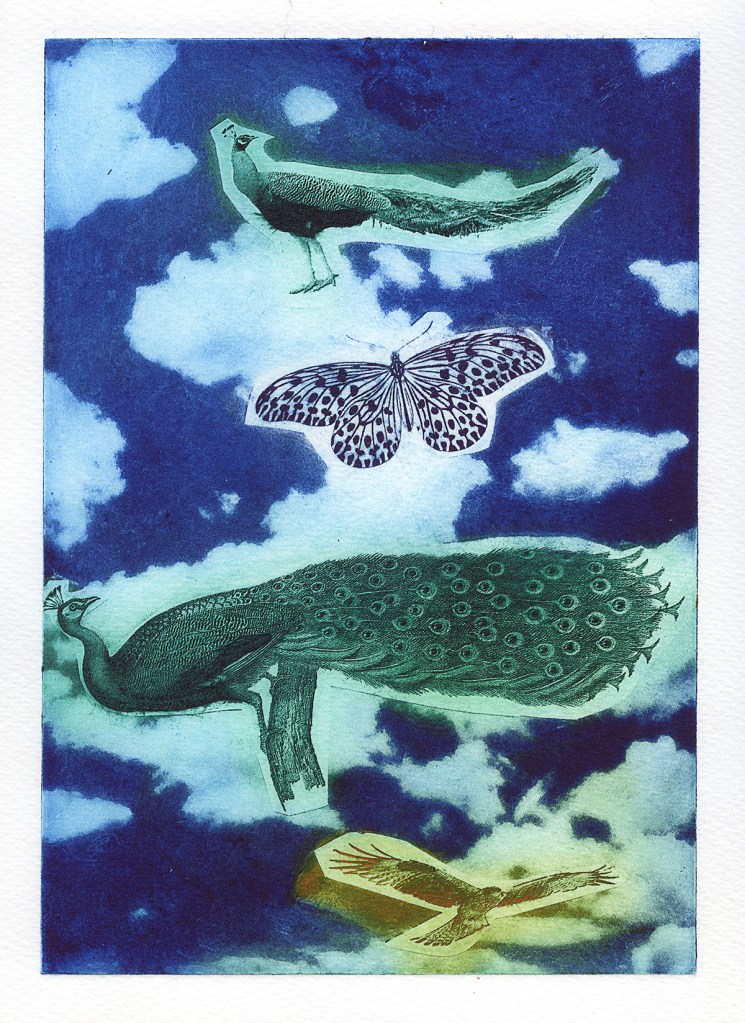
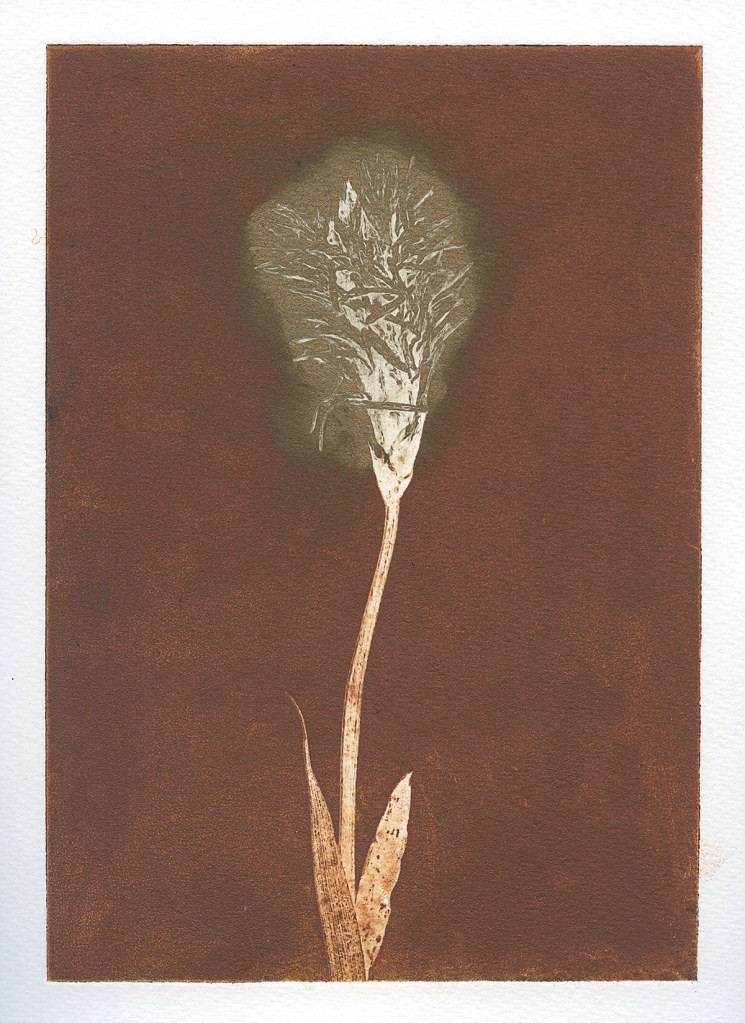
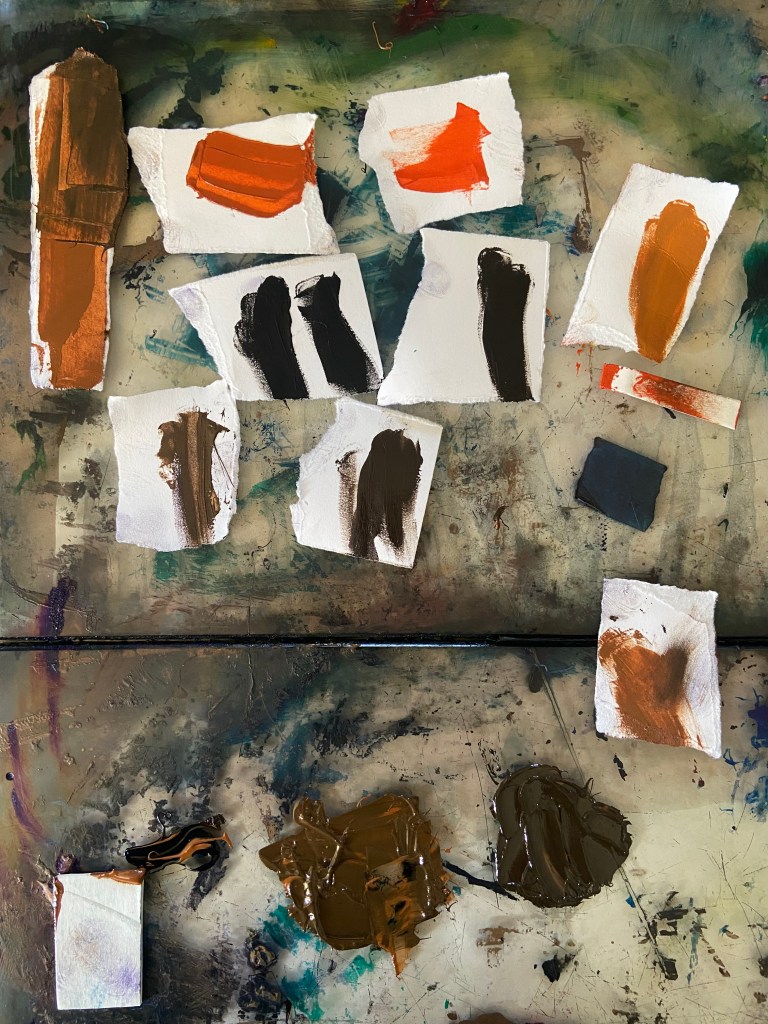
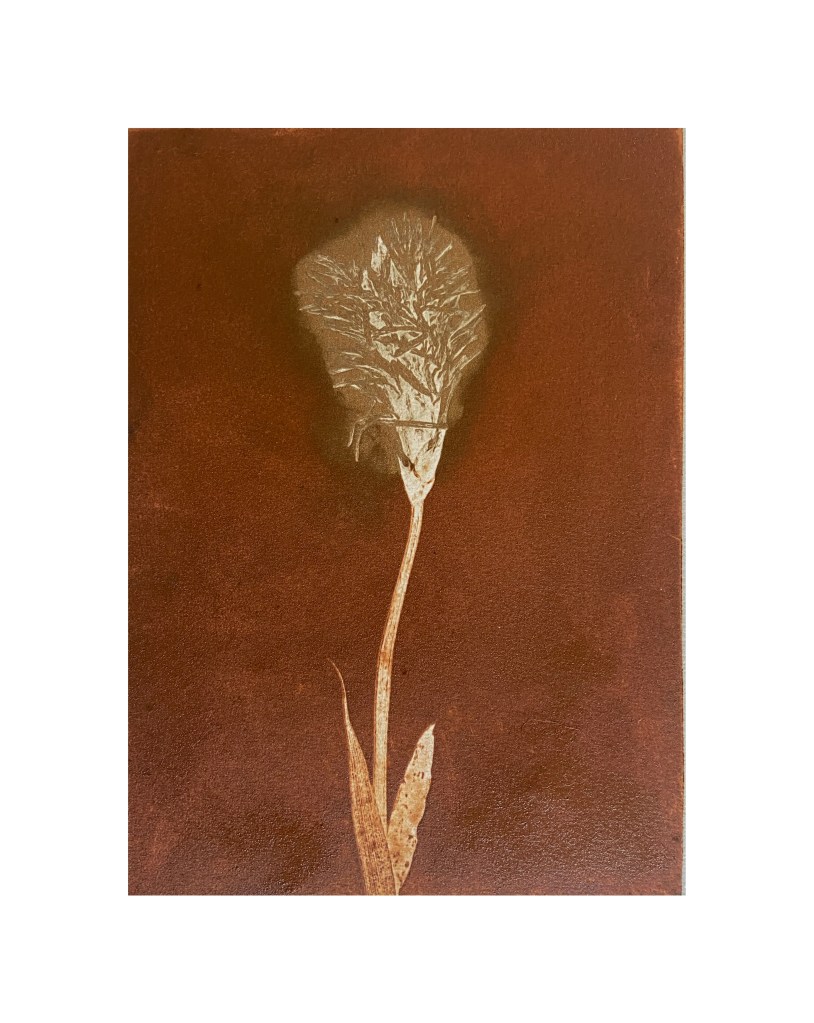
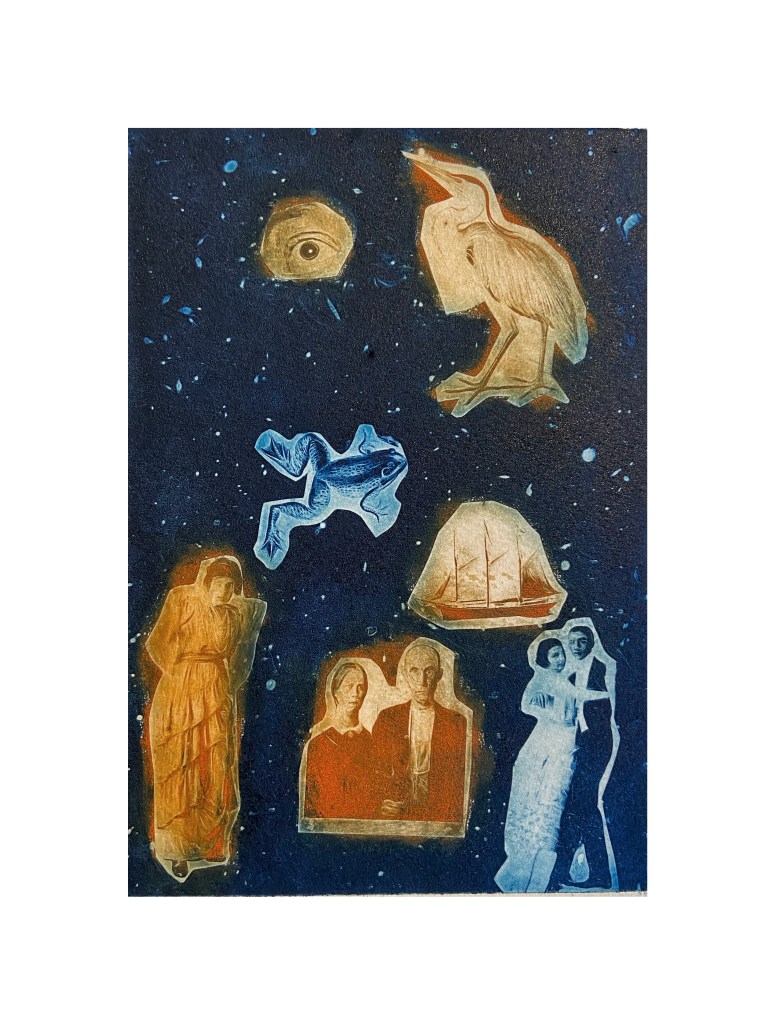
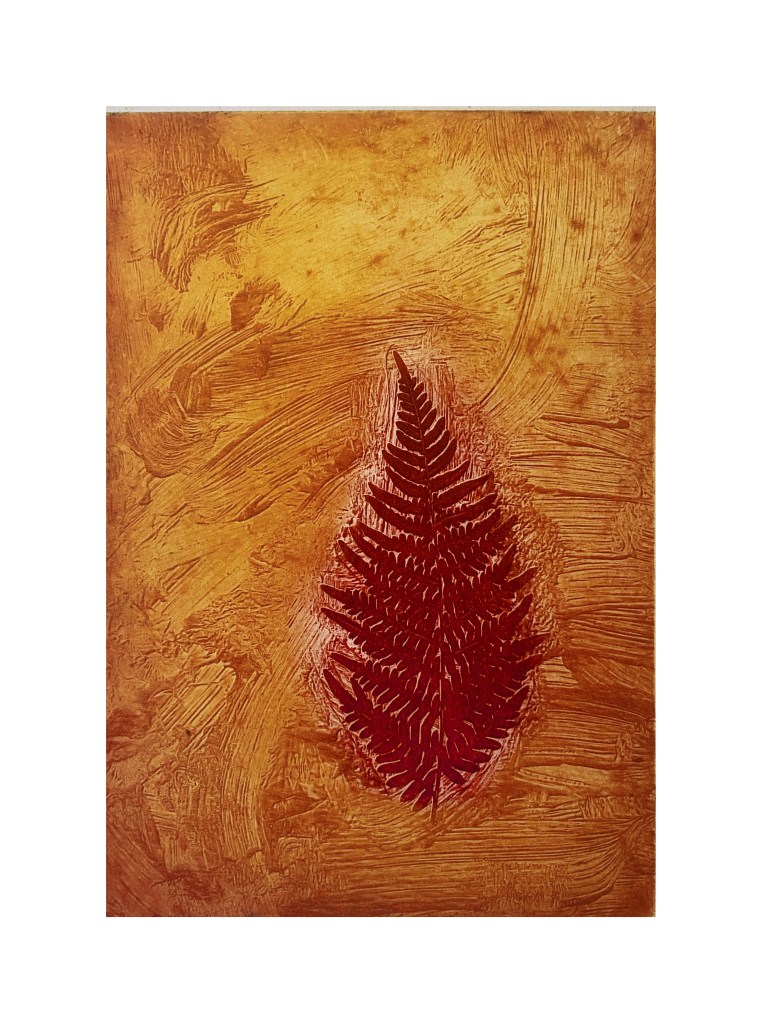
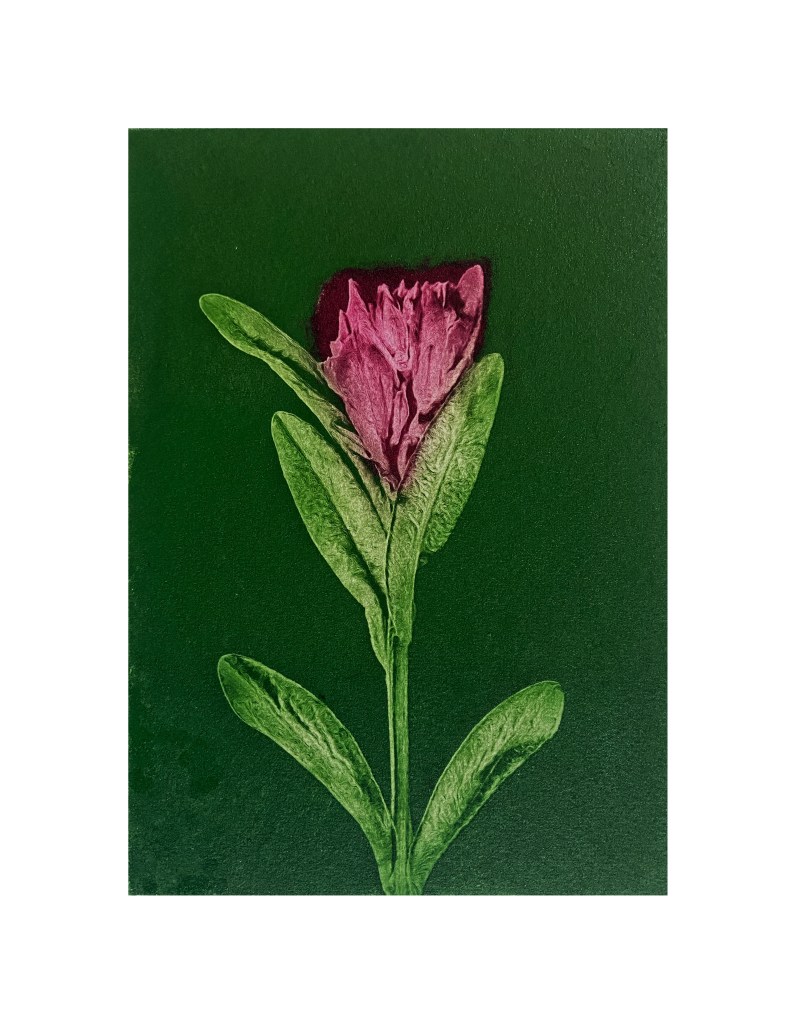
Alongside the collaborative elements of A Tapestry of Connection, I have continued to develop a body of larger-scale photopolymer prints as part of my individual studio practice. These works are separate from the collaborative workshops and have been developed independently through ongoing research, technical experimentation, and printmaking processes. I have prepared eight photopolymer plates and am currently exploring colour, layering, and printing techniques. The works remain in progress, and these images represent an early stage in their development.
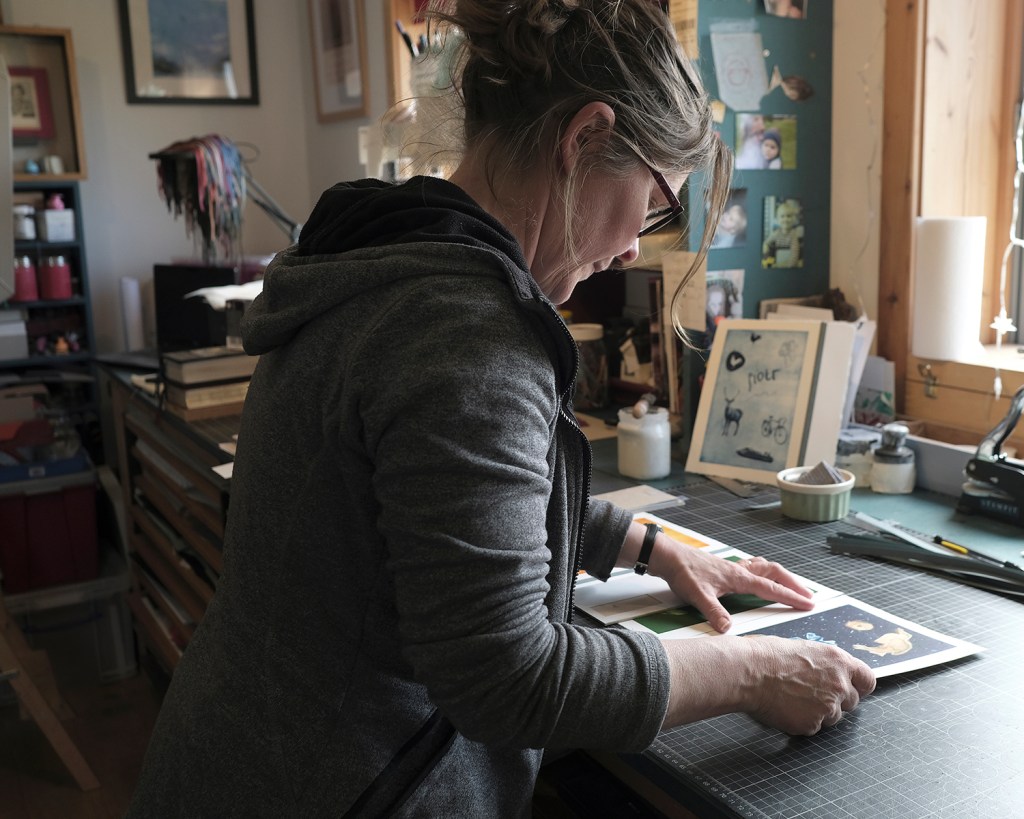
Working with Corinna Krause on this bookbinding workshop has been a rewarding experience. Corinna is skilled, meticulous, and thoughtful in her approach, and I always felt comfortable making decisions while being gently guided by her experience and expertise. The process involved a huge amount of measuring, planning, testing, and problem solving, and having her calm and professional approach throughout gave me a lot of confidence in the work.
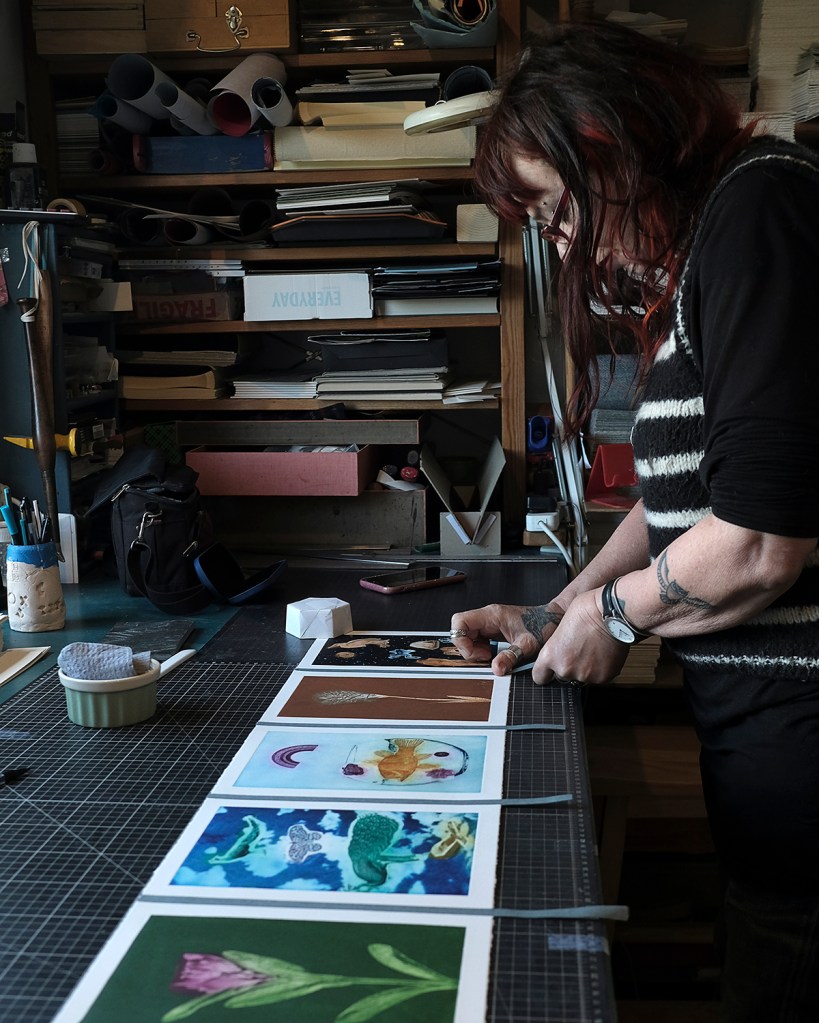
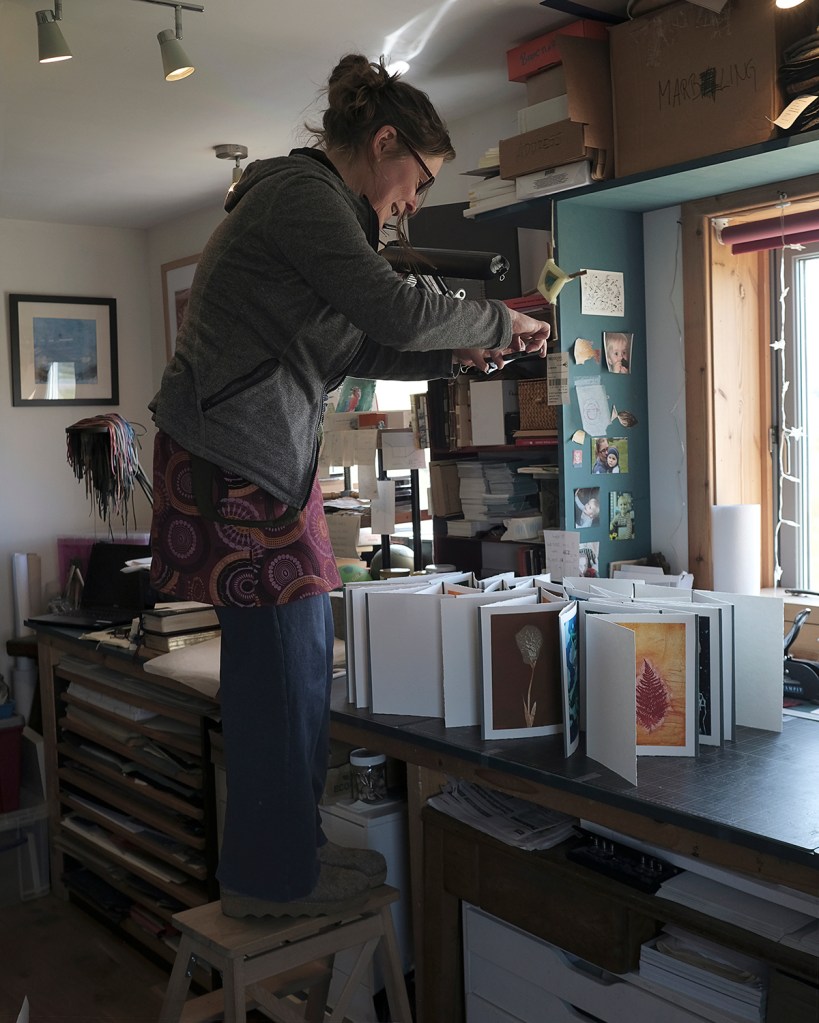
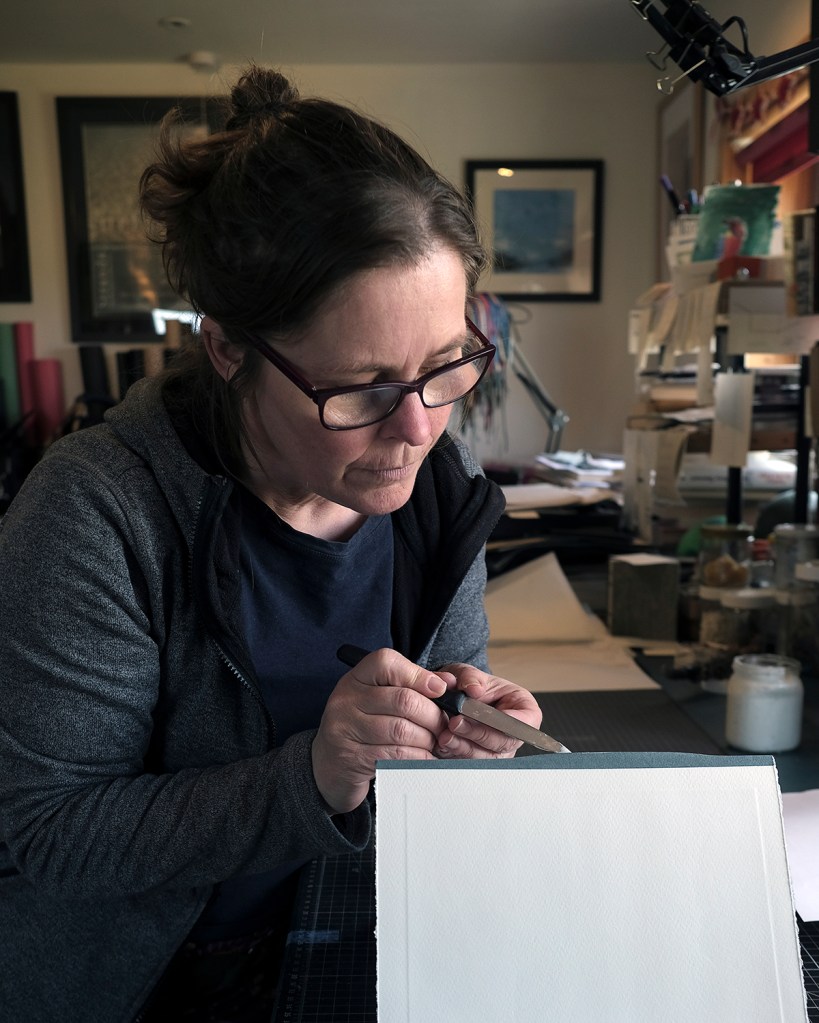
me adding spine tape to connect the prints for the concertina book
As with any creative project, it was also a reminder of the importance of building flexibility into schedules and expectations. We had to reschedule one of the workshop days due to illness, which is simply part of working on longer, handmade projects like this. I had also prepared one or two extra prints in case of accidents or unexpected issues during the binding process, and I made a proof print specifically for measurements and calculations so that we could test everything before committing to the final works.
Corinna approached every stage with real care and precision, and I think she genuinely enjoyed the project too, which made the collaboration feel both supportive and creatively engaging.
One of the parts of the project I am most looking forward to is giving the completed artist books to the non-verbal autistic adults who contributed to the work. The books bring together both their imagery and my own through photography, printmaking, collage and collaborative process, reflecting the shared nature of the project from beginning to end.
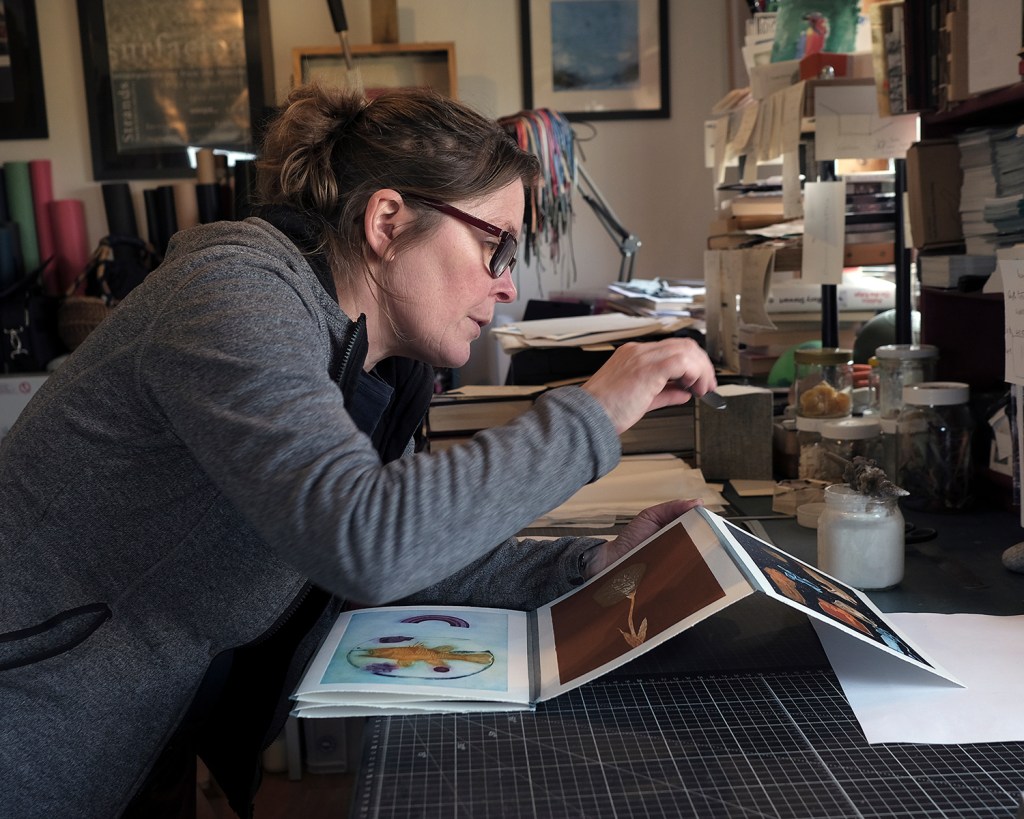
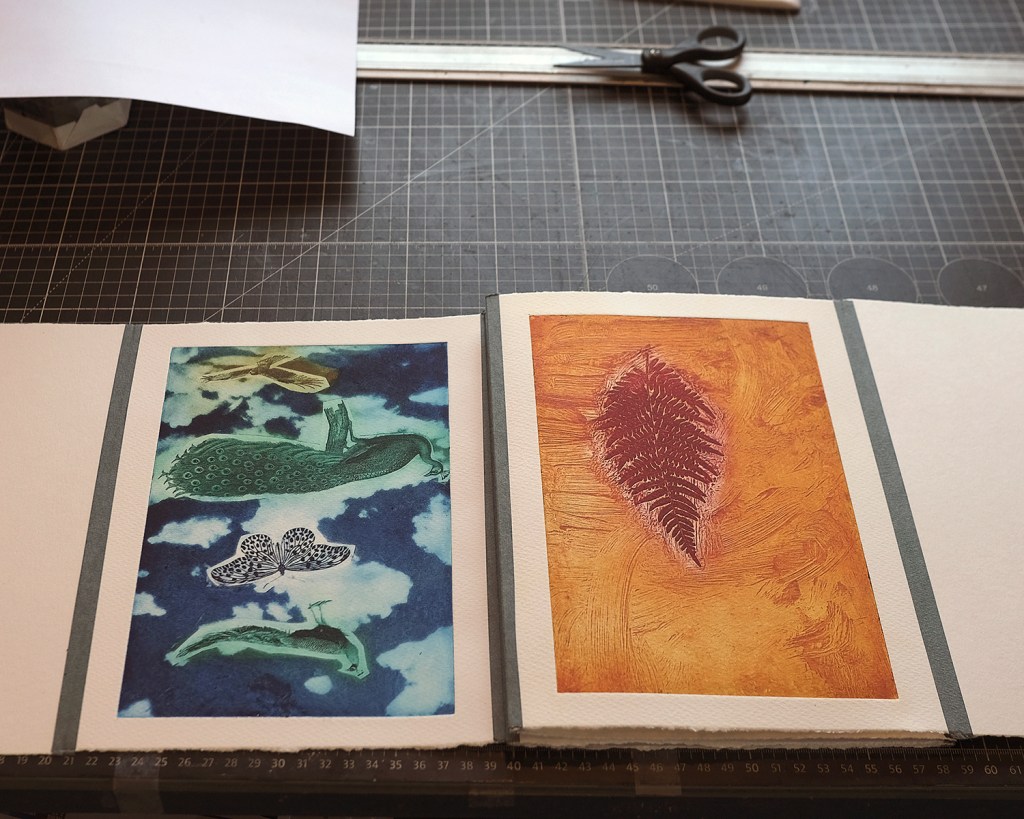
pages in the the concertina book
The books are not simply documentation of workshops or participation, but a celebration of creative exchange, collaboration, and the different ways connection and communication can take place through making. Seeing all of these elements brought together equally within the finished books feels like a meaningful conclusion to this stage of A Tapestry of Connection.
Back in Inverness and back through the doors of Highland Print Studio. This time I had some slightly longer sessions booked, which allowed me time to really focus on developing and proofing some larger prepared acetates. This work sits alongside, but separate from, the artist’s book I am currently developing in collaboration with non-verbal adults.
From the outset, it has been my intention to create this series of larger prints: works that are connected to the wider project in theme and spirit, but not part of the collaborative work that I have been doing.
And the results? Well… good. Solid. Promising. Message to myself – ‘keep going, you’re onto something.’
There’s something about working in an open access print studio that I really love—the quiet, unspoken sharing of knowledge that just happens. I met Emma during one of these sessions – she told me she is rediscovering her printmaking practice, and it was lovely to swap thoughts, tips, and small victories. That gentle sense of community really does feel like part of the process.
print table with inks and scrim
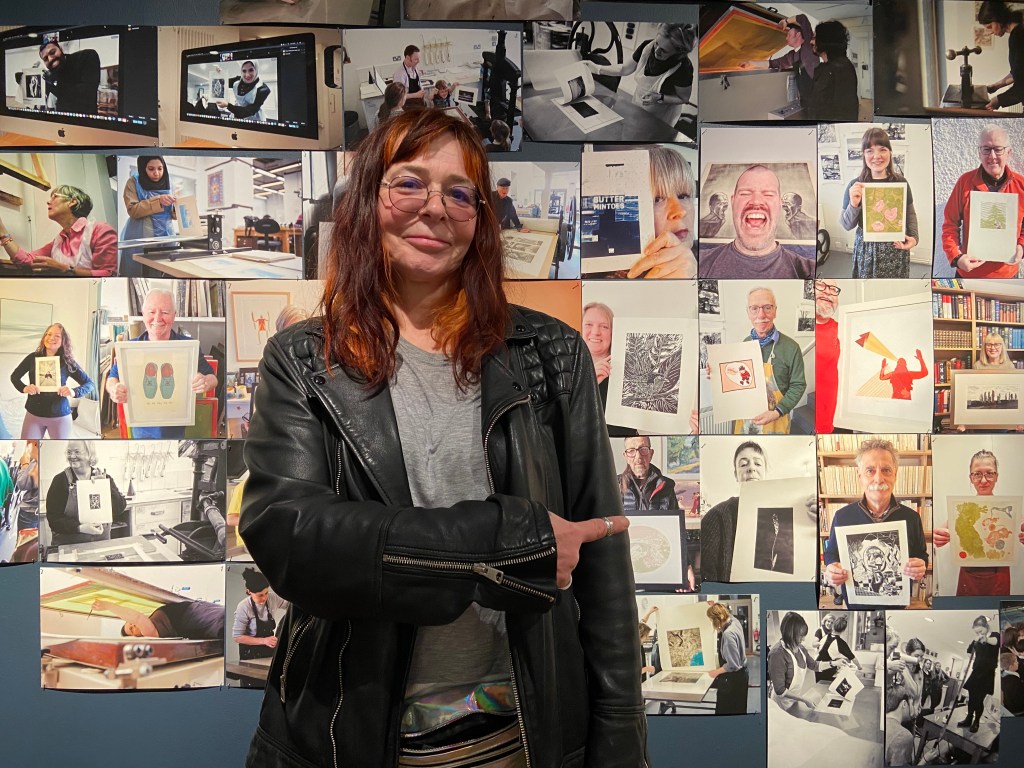
I also went along to the 40-year anniversary exhibition at Highland Print Studio, which felt like a proper celebration—not just of printmaking, but of all the people who’ve passed through the doors of this print studio. There was something quite grounding about walking around it, recognising the continuity of practice and place. And slightly surreal (in the best way) to see my own print selfie up on the wall alongside everyone else from the past 40 years—casually becoming part of the archive, no big deal.
Outside of the studio, I’ve been exploring more and becoming more familiar with the landscape and place—it’s slowly shifting from new place to somewhere I recognise and feel part of. And the weather has been… ridiculous. Properly beautiful. Hot days, 21–23 degrees, clear skies—this time away was dangerously close to feeling like a holiday… I’m not complaining!!
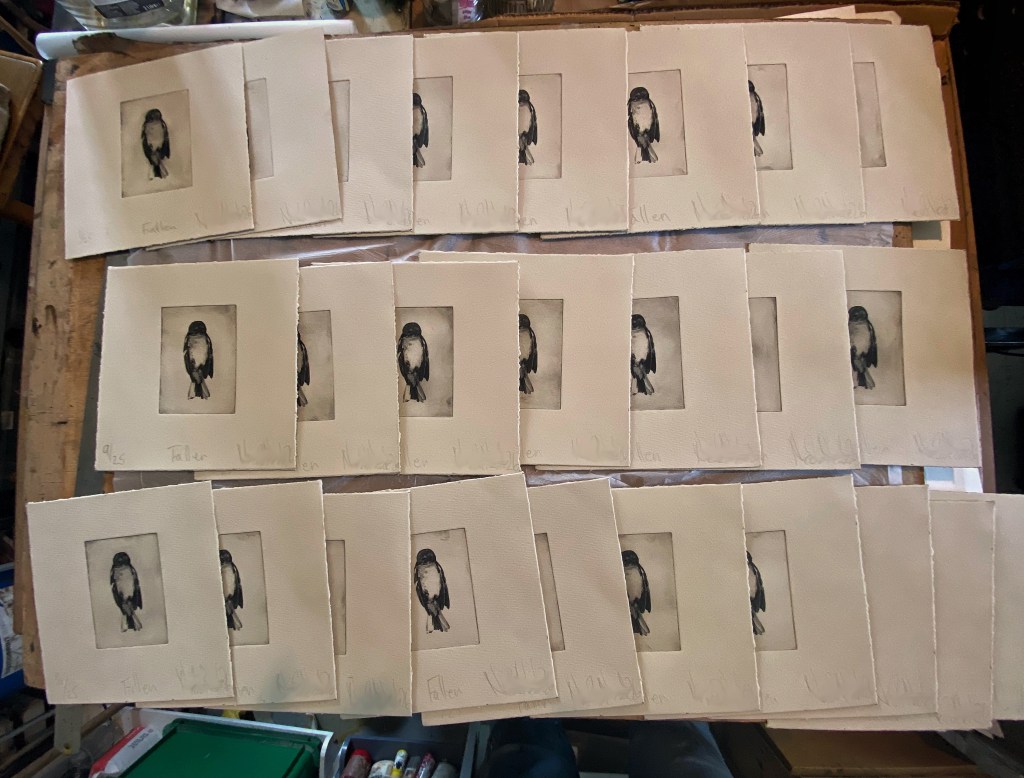
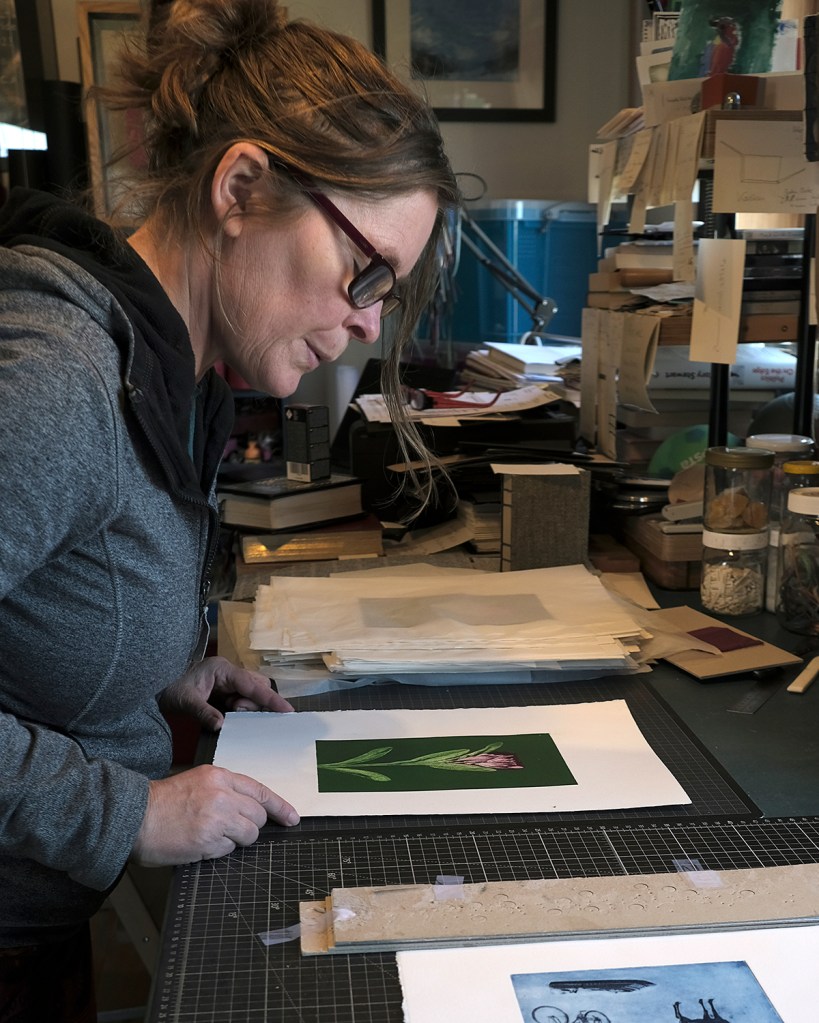
The concertina book pages are finally complete. I produced an edition of six images which will fit across six pages—thirty-six prints in total. Each one is a photopolymer print, built up in two or more colours. It’s a slow, exacting process—there’s no rushing it—just deep concentration and a willingness to embrace the rhythm of printmaking.
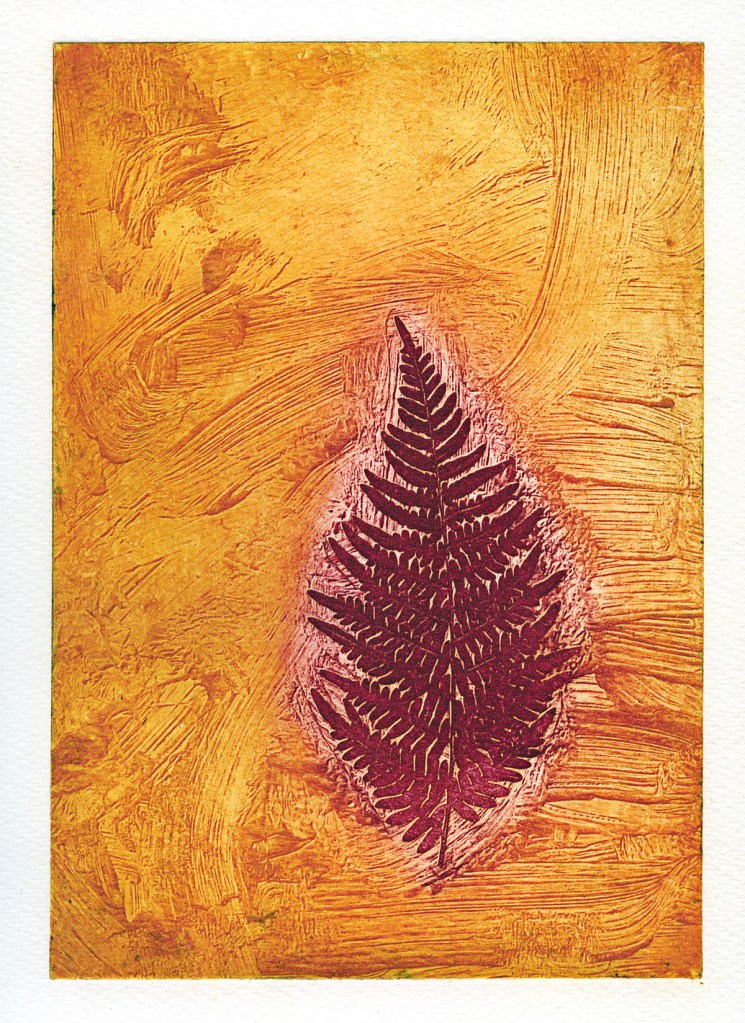
I also pushed the processes, incorporating some monotype backgrounds alongside the photopolymer layers. It added complexity, but the results feel richer for it. All of this has been happening over the past couple of weeks – the last few days of which have been hot and sunny—beautiful!
Working with non-speaking autistic adults 💙
With my husband away on the mainland for the week, I’ve been on full animal duty, which has added its own layer of choreography to the studio routine. The doors and windows have been open because of the gorgeous weather – which our two cats have taken as an invitation to become wildly energetic. Added to that our sixteen chickens— have also been opportunistically wandering up to the house and attempting to sneak inside for a bonus snack. — it’s fair to say the studio has felt… lively!
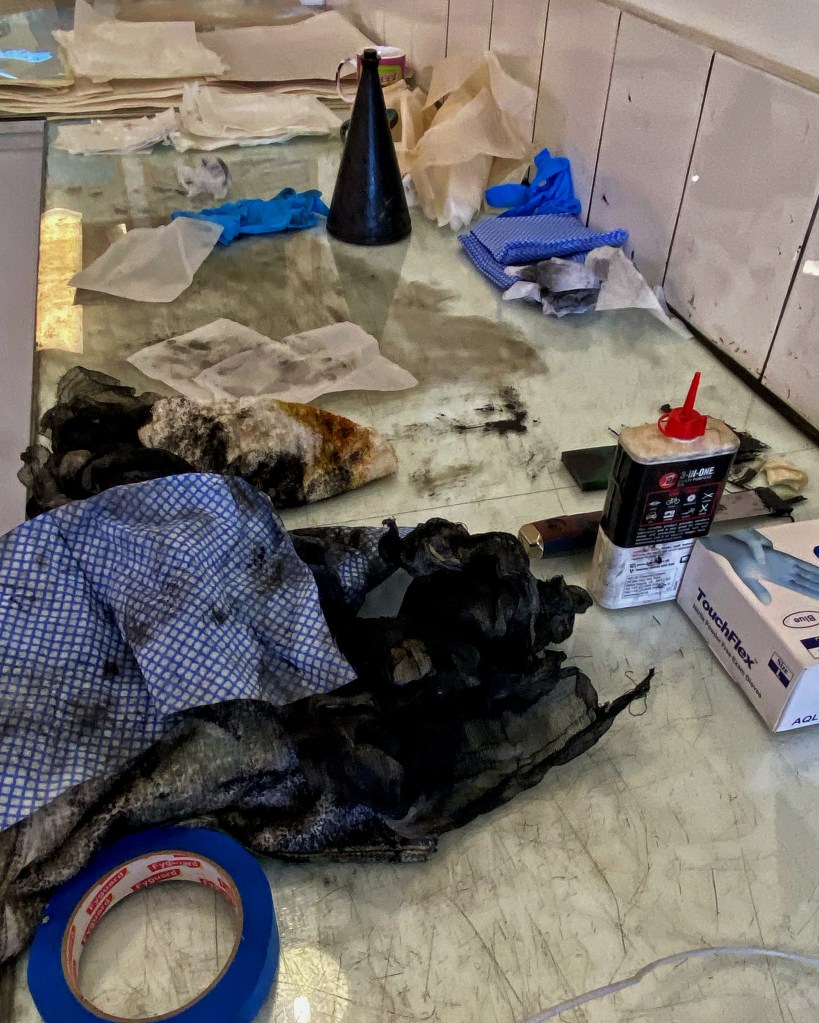
At several points I found myself mid-print, trying to rescue paper with one hand while ushering out a chicken with the other. I ended up being as ink-covered as the prints themselves.
Working with non-speaking autistic adults 💙
But somewhere in the middle of all that, a moment of stillness: yesterday, I heard the unmistakable call of a cuckoo. The first call of the season, I love that sound it always stops me in my tracks. Such a small bird, travelling all the way from Africa—something I feel a quiet connection to, having been born there myself.
And now, on a very happy note, the pages of A Tapestry of Connection are finished. There’s real satisfaction in reaching this point—especially knowing how much care, patience, and persistence it has taken to get here.
Next stop: the bookbinding workshop with Sollas Bookbinding early next month. I’m very much looking forward to seeing these prints take their final form.
Talk by Nicola Neate – A Tapestry of Connection (and Mild Panic)
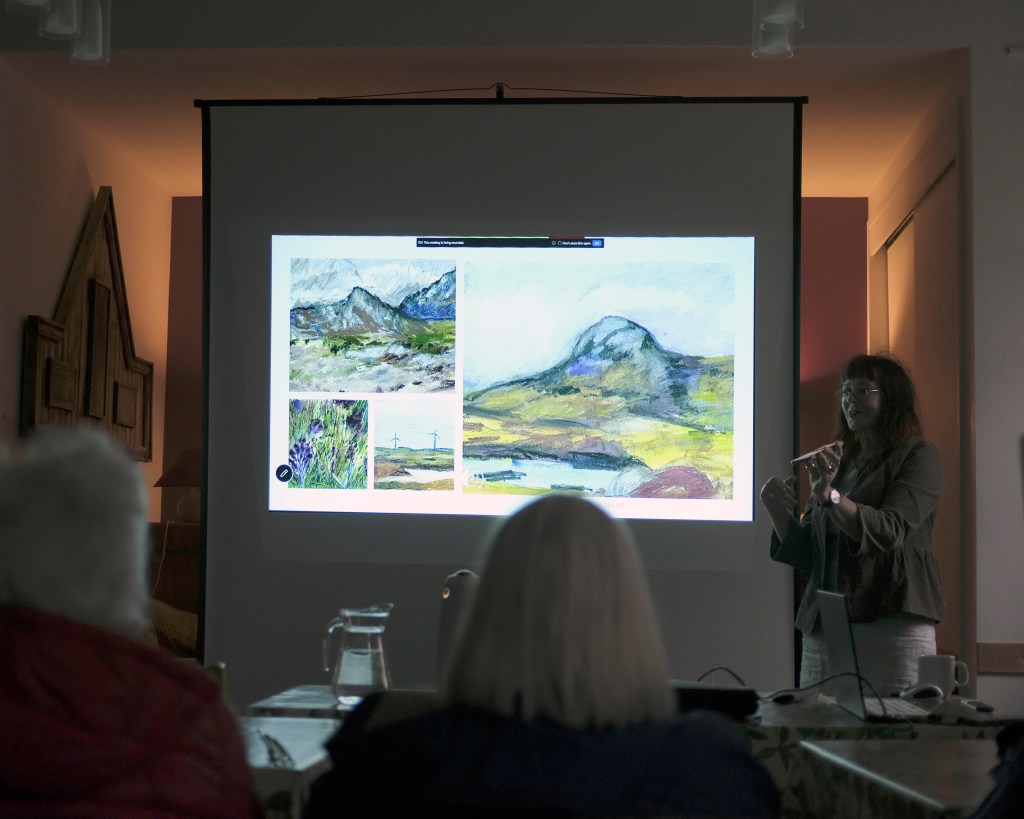
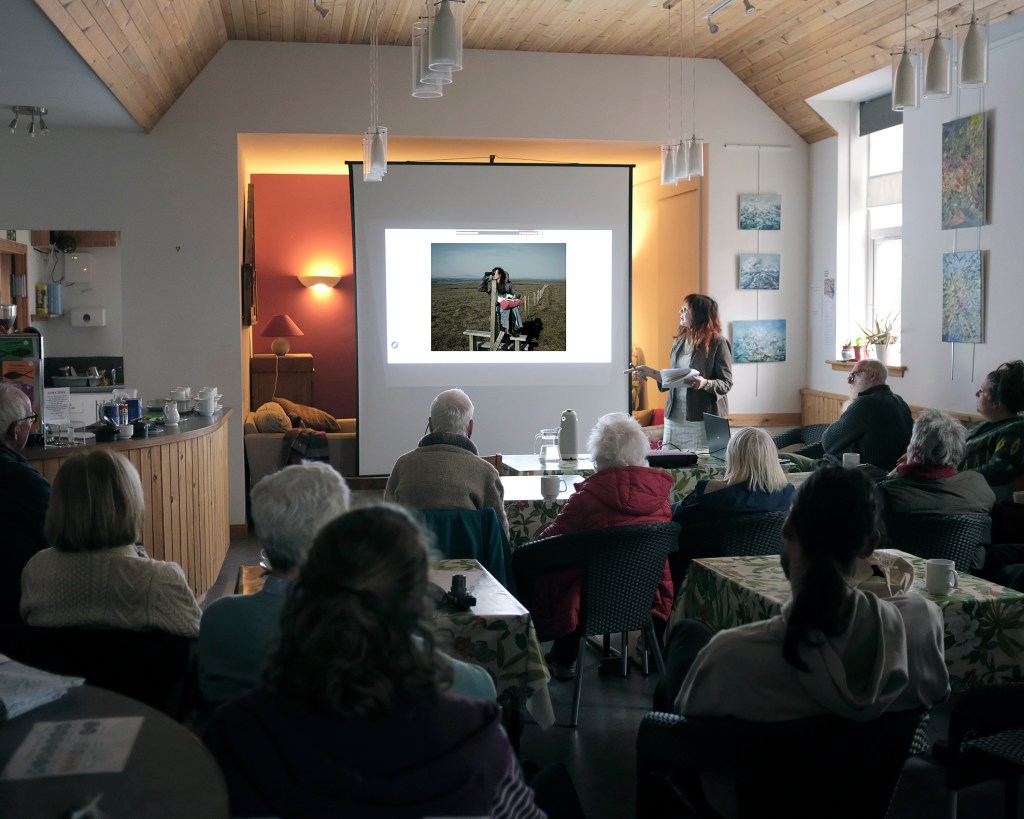
Thursday 16 April 2026, 7.30pm, at Caenn na h-Àirigh, Scotvein, Grimsay, I stood up and did something that, a few weeks ago, I genuinely thought might not happen at all: I gave a presentation on my project A Tapestry of Connection.
First of all—thank you. Truly. To everyone who came along, listened, and engaged so generously. It meant a great deal. Special thanks to Sara for creating the poster and organising the evening so beautifully, and to Simon, who calmly wrangled the digital side of things and ensured that sound was, in fact, heard (never something to be taken for granted).
The talk itself began with a bit about my wider practice before moving into the winding journey of this project. And it has been a journey. One with unexpected turns, small triumphs, and at least one moment where I seriously considered emailing Creative Scotland to say, “Hello, I may have been wildly overambitious and everything is falling apart.”
But more on that later.
Presentation at Caenn na h-Àirigh, Scotvein, GrimsayPresentation at Caenn na h-Àirigh, Scotvein, GrimsayPresentation at Caenn na h-Àirigh, Scotvein, Grimsayphotos by John Kippin
This project has been supported first by VACMA funding and then by Creative Scotland for this second phase, and I honestly don’t think I could have brought it to life without that support. It has allowed me to explore ideas of connection—between place, process, and people—in a way that has grown far beyond what I initially imagined.
A particularly important part of this has been working with two day care service users, who have been, in equal measure, fabulous and challenging (the best combination, really). Their work is at the heart of what comes next: I’ll be transforming elements of their artwork into photopolymer prints, which I’m very excited about.
In May, I’ll be attending a bookbinding workshop with Corinna Krause at Sollas Books, where I’ll be making concertina books that will bring together these prints—both theirs and mine. There’s something very satisfying about the idea of folding, layering, and physically connecting all these strands.
And connection really has been the thread running through everything. Through walking, making, collaborating. Through linking up with Lionacleit Day Care Centre, the Grimsay Community Association, and becoming part of Highland Print Studio in Inverness—which has opened the door to a wider and very supportive print community.
The project has also stretched beyond my immediate location. Sharing work online has allowed it to reach the mainland and beyond—like it has quietly grown its own set of tentacles (a slightly unsettling but accurate image). The connections keep extending, often in ways I couldn’t have planned.
Which brings me back to the mild panic.
Before attending Highland Print Studio, I ran into some fairly catastrophic technical problems. The kind that make you question all your life choices. There was a definite moment of “Well, this is it. I’ve broken everything. Time to write a very apologetic email explaining that the project has… dissolved.”
But somehow, things came back together. Not perfectly, not smoothly—but enough. And standing there giving the talk, hearing people respond to the work, I had a strong sense that all those threads I’ve been trying to tie together are beginning to hold.
So yes—there have been problems. Quite a few. But right now, I feel genuinely pleased with how things are going. And perhaps more importantly, I feel that the connections I’ve been building—slowly, sometimes chaotically—are starting to make sense.
From Printmaking Meltdown, Studio Magic, and a Slice of Cake
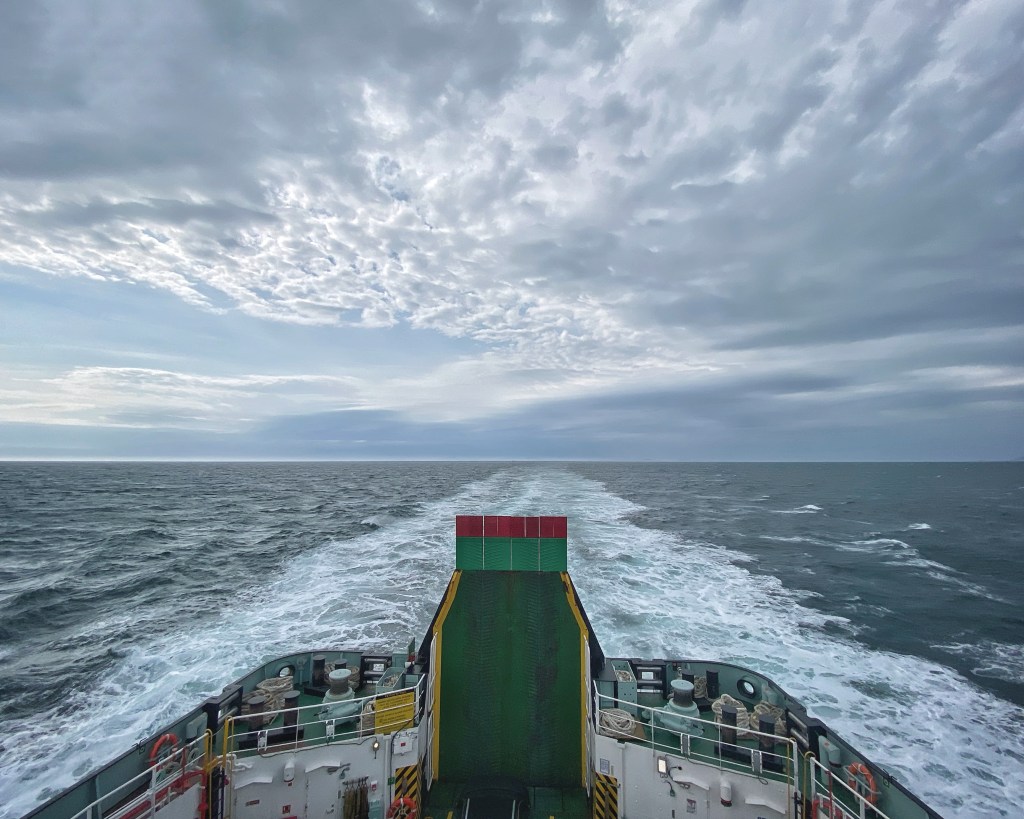
I set off from my home in North Uist on Tuesday morning (7th April) after what has been feeling like a never-ending winter—wind, rain, and general greyness—and somehow travelled into… actual sunshine ☀️ 18 degrees, blue skies, and a ferry crossing that felt like a reset button.
At around 7pm I arrived in Inverness to a perfectly positioned little room (close, comfy, clean, not wildly expensive—win).
8th April at 10am-I went straight into Highland Print Studio … and honestly, what a turnaround. After weeks of battling my home UV unit (still not forgiven), my plates finally behaved. Consistent. Predictable. No stress. Highland Print Studio is purpose-built, well-equipped, and—most importantly—reliable. No guessing games, no crossed fingers, no whispered negotiations with machinery. Just calm, consistent process.
After weeks of stress, second-guessing, and mild existential dread, everything came out exactly as predicted. Consistent. Clean. Usable. I could practically feel my shoulders drop about three inches. It’s hard to overstate how reassuring it is when something finally behaves the way it’s supposed to. Suddenly, moving forward doesn’t feel like a gamble—it feels possible.
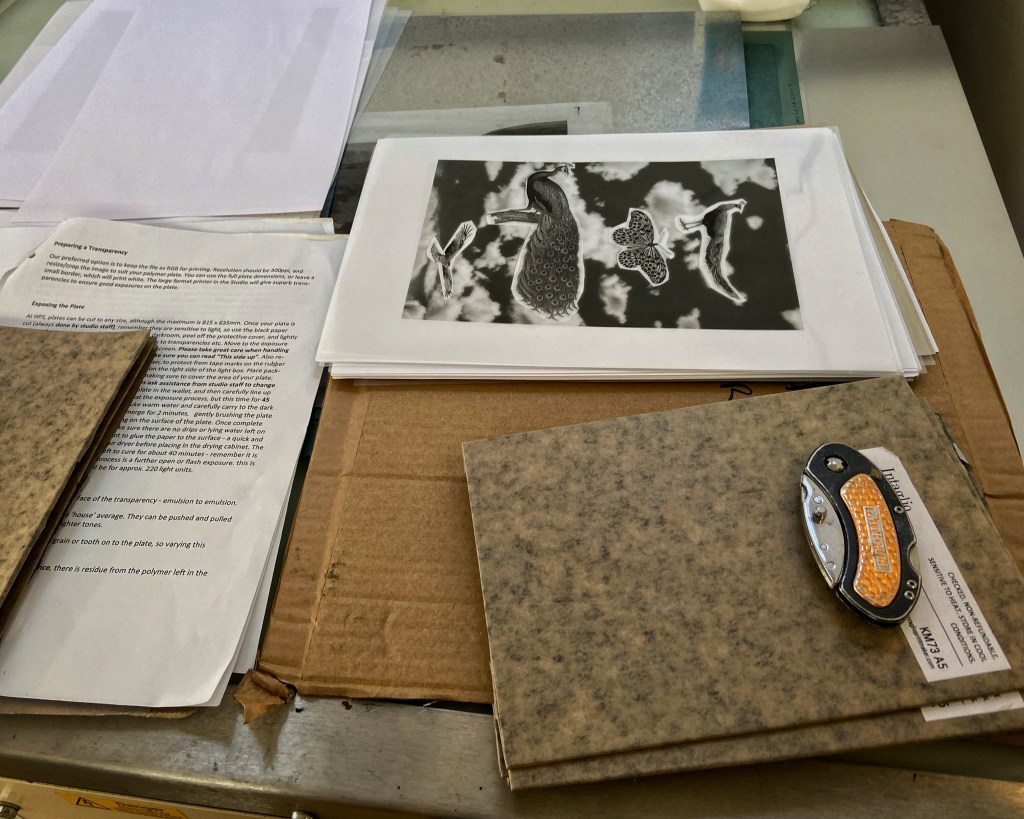
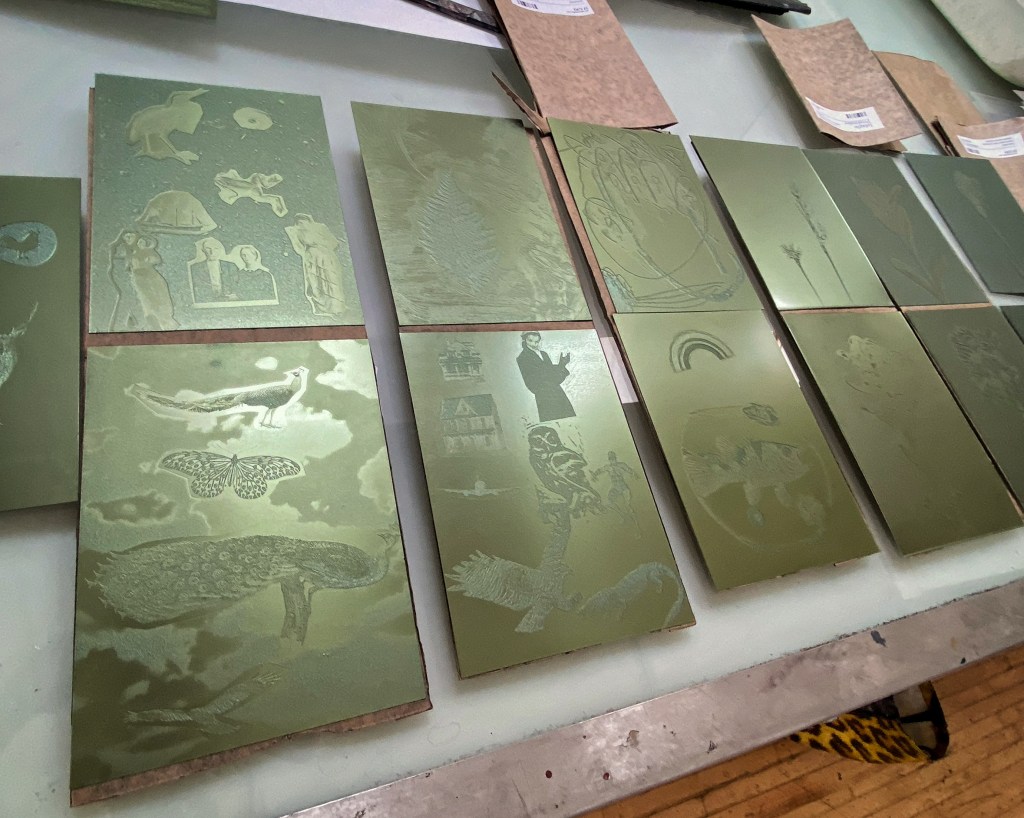
Ferry crossingLovely little Guest roomAcetates to developBusy Print StudioDeveloped photopolymer plates
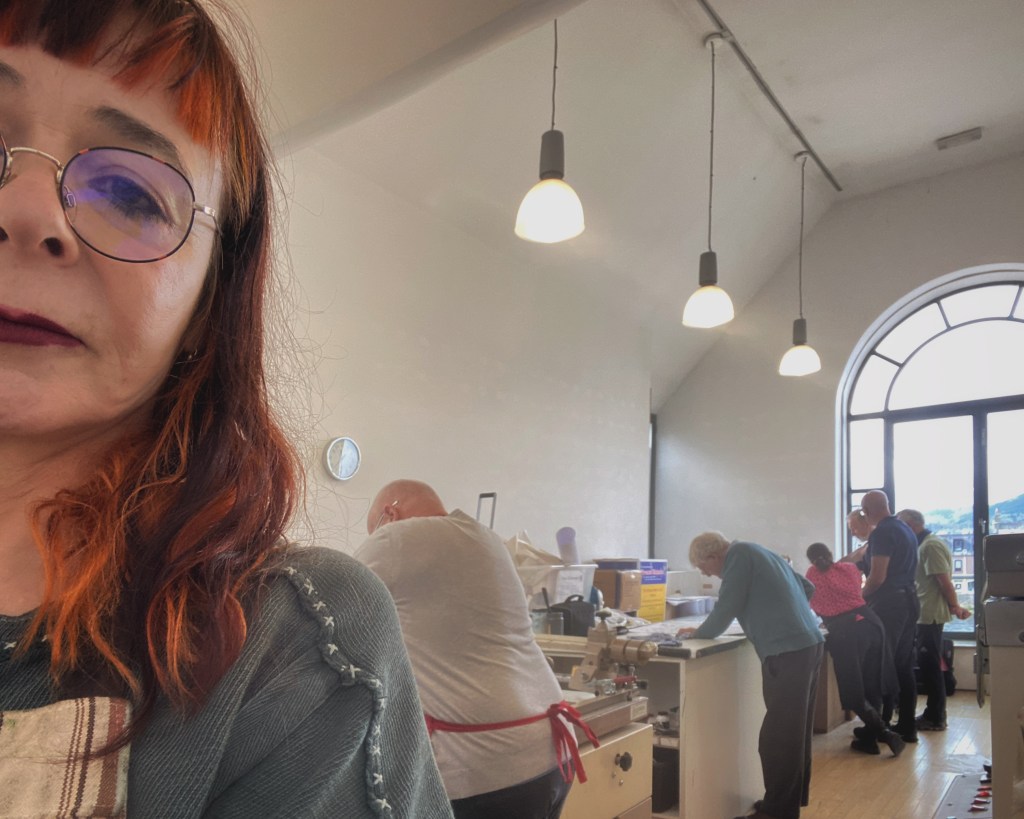
The studio was buzzing—presses running, great conversation, and a group of lovely gentlemen printmakers on a course. There’s something incredibly comforting about a busy studio. I was definitely in my happy place 🎨 😊
The day ended in the best possible way—with an invitation to tea and chocolate cake. I’m fairly certain this was a pre-celebration for the studio’s upcoming 40-year anniversary – still there’s something about sharing cake after a productive day that feels like a small but significant victory.
I left feeling lighter, calmer, and—most importantly—ready to continue. Sometimes all it takes is the right space, the right people, and equipment that doesn’t actively conspire against you.
And possibly cake. Definitely cake!
Today (9th April) I had a 4am start to catch the 9am ferry home… at 11am!
Good journeys, good studios, good people—and yes, cake—make all the difference.
Island life in North Uist isn’t something you master overnight—but give it eight years and a lot of ferry journeys… I am finally starting to get the hang of it. These days I feel less isolated – like I’m finding a place within a wider Highland (and slightly sea-crossed) community.
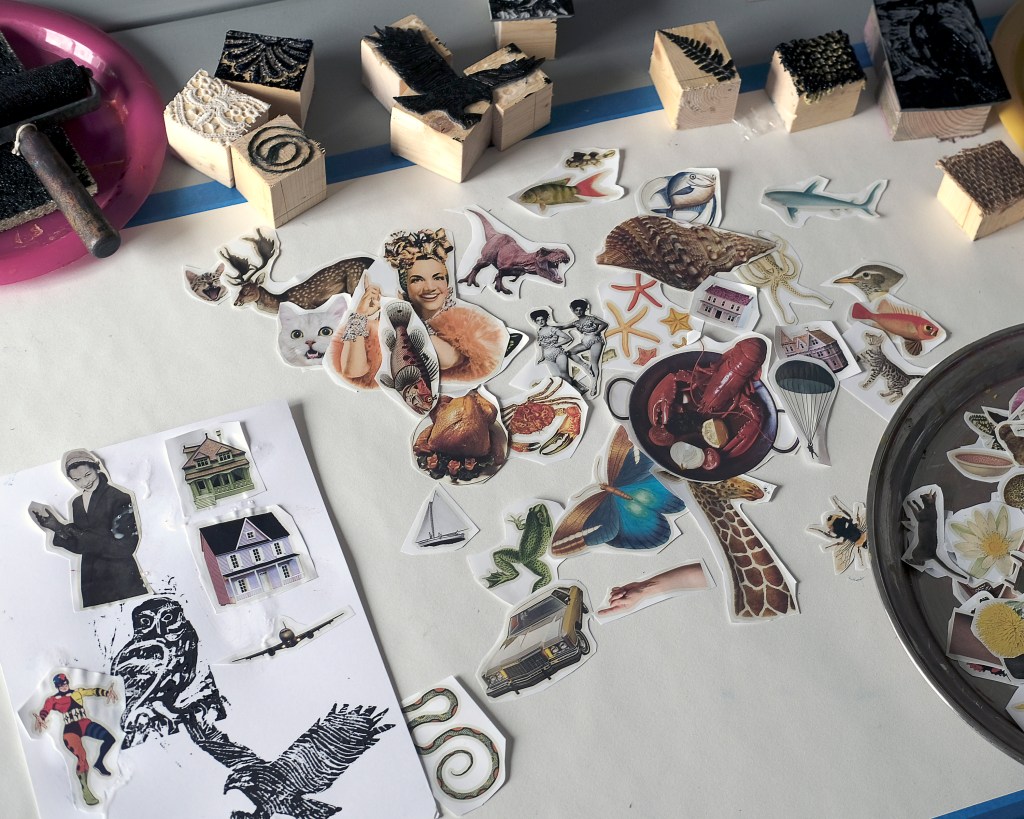
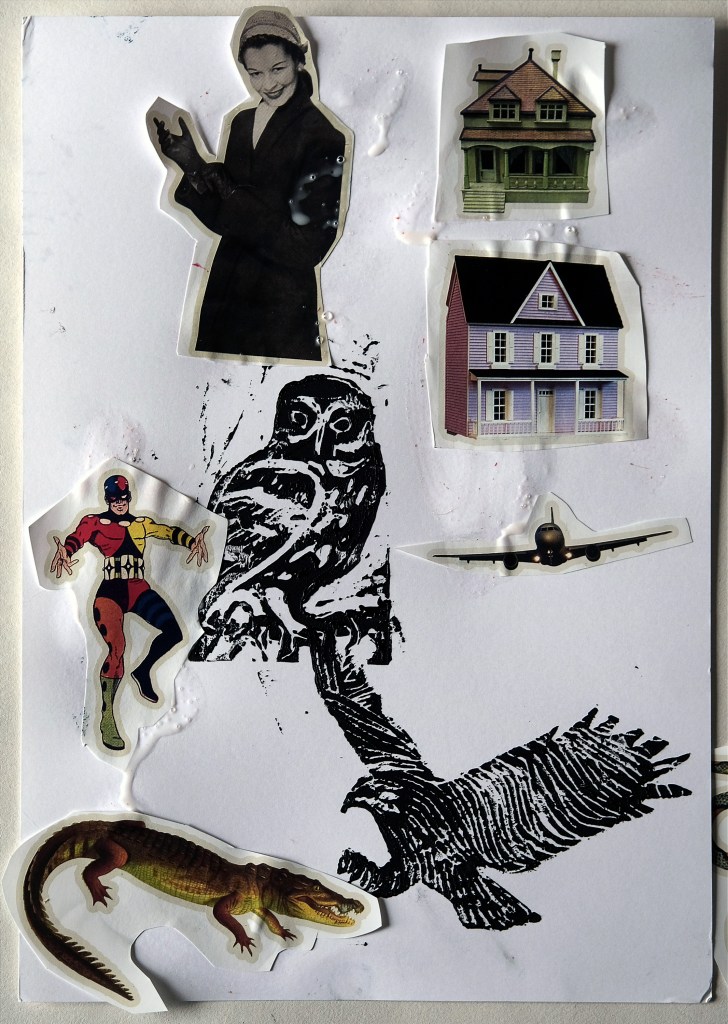
This was the final workshop with the daycare participants – I can’t believe how quickly it has gone by. Over the weeks, they have engaged with and embraced a range of processes—stencils, frottage, colouring, tracing, collage, and moments of free-form drawing that allowed for independent expression to emerge.
It has been especially rewarding to see confidence build in subtle but meaningful ways. Today, one participant confidently used the small lino stamps I had made, combining them with collage to create something distinctly their own.
Working with non-speaking autistic adults 💙
During the course of theses workshops I’ve learned to step back—resisting the urge to guide too closely and instead allowing space for intuition and play to take over. The balance between gentle encouragement and thoughtful restraint has been key, creating an environment where experimentation feels safe and personal voices can surface. From this rich body of work, I will now begin translating the artworks into photopolymer prints, bringing them together in a concertina book that will include both their work and my own—a true Tapestry of Connection, unfolding across pages that reflect our shared process of making and learning.
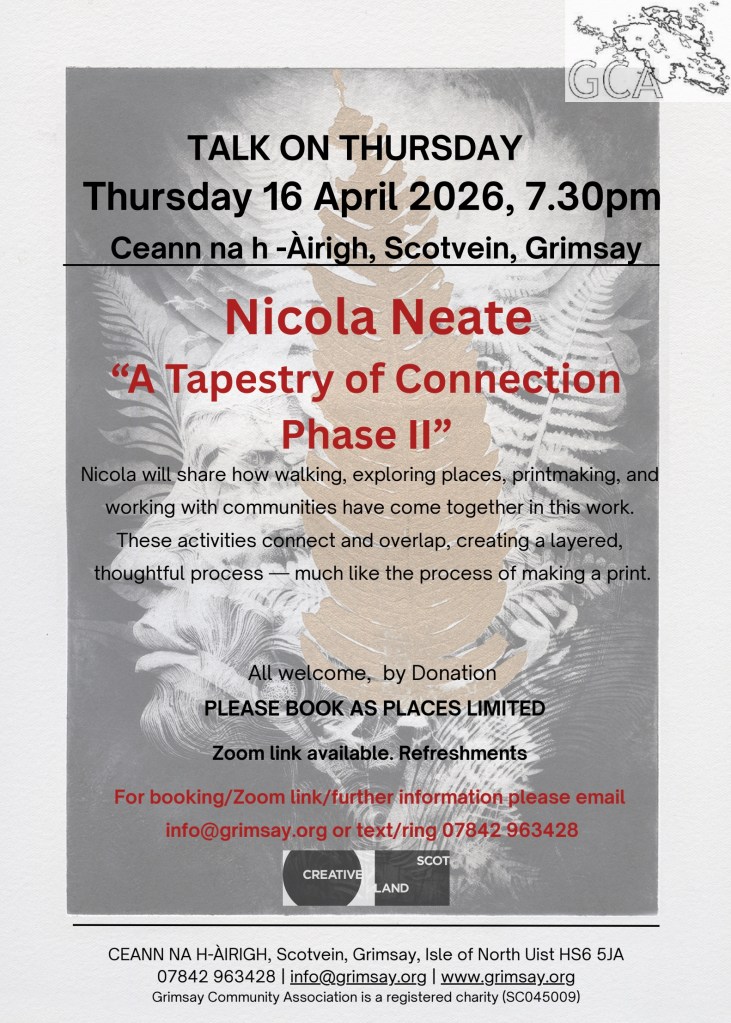
I’ll be giving a talk about my work and this project—if you’re on the island and would like to come along, all the details are on the poster below.


 Nicola Neate