Day Thirteen 14 05 25
6 PM

The Day was so beautiful I decided to take an evening walk starting at 6 pm.
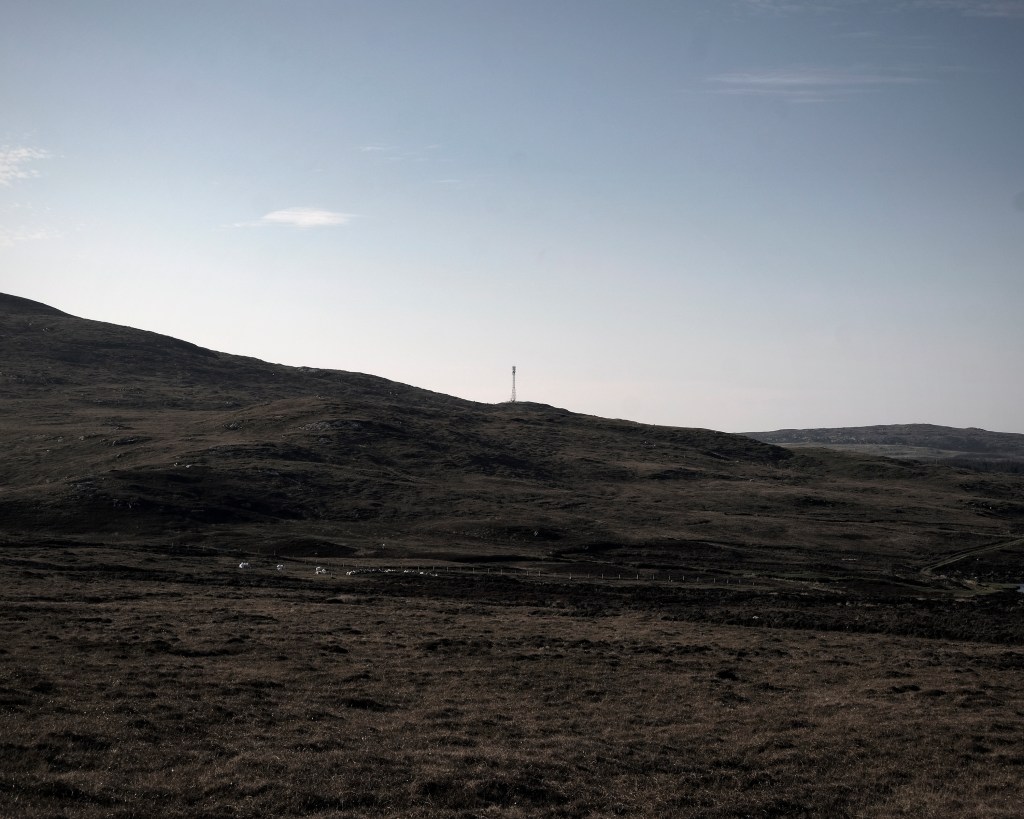
On this walk, along the mile long stretch of the Hebridean Way I heard a deep, unsettling sound in the distance, which might be related to military operations happening in South Uist. The sound resembled thunder or some kind of explosion.
South Uist is home to the Hebrides Range, a significant military testing facility operated by QinetiQ on behalf of the UK Ministry of Defence (MOD). This range is primarily utilised for the testing and evaluation of various weapons systems, including missiles and rockets. Activities conducted at the range can involve live firing exercises, which are known to generate substantial noise.
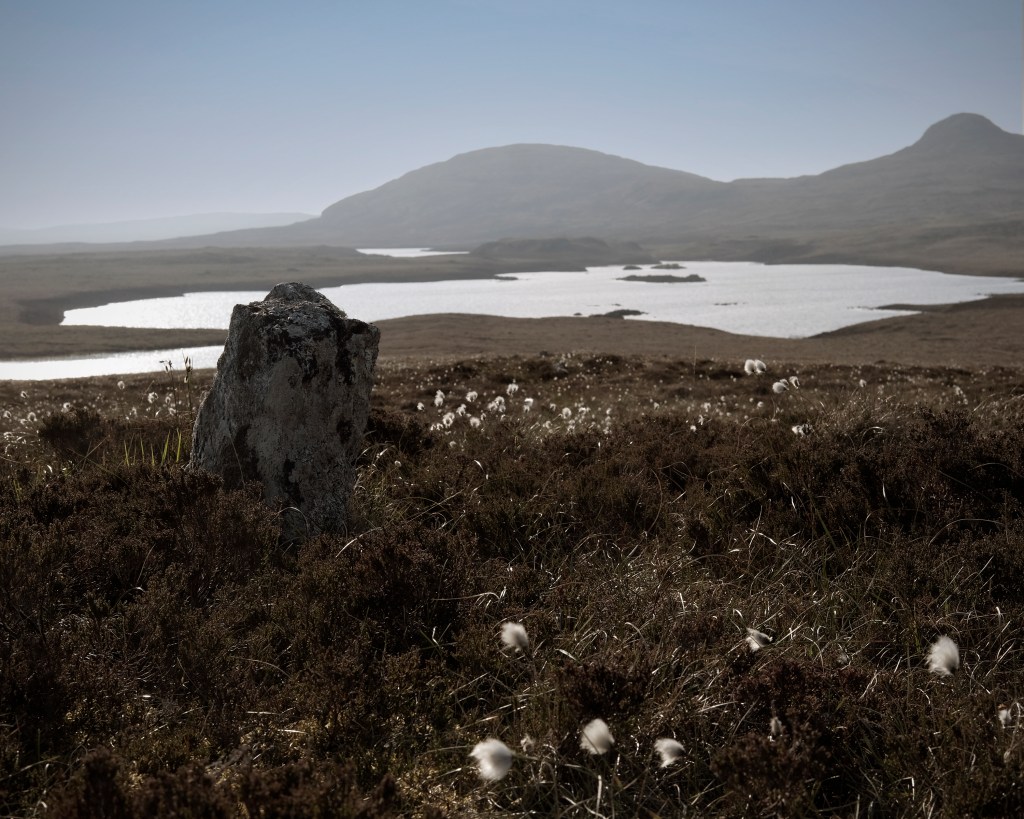
These stones are said to be the graves of spies who were buried alive, or possibly the result of a witch’s curse.
Spotted
- Sheep high on Blathaisbhal (Blashaval) hill
- A bubble bee
- A short eared owl
2 PM
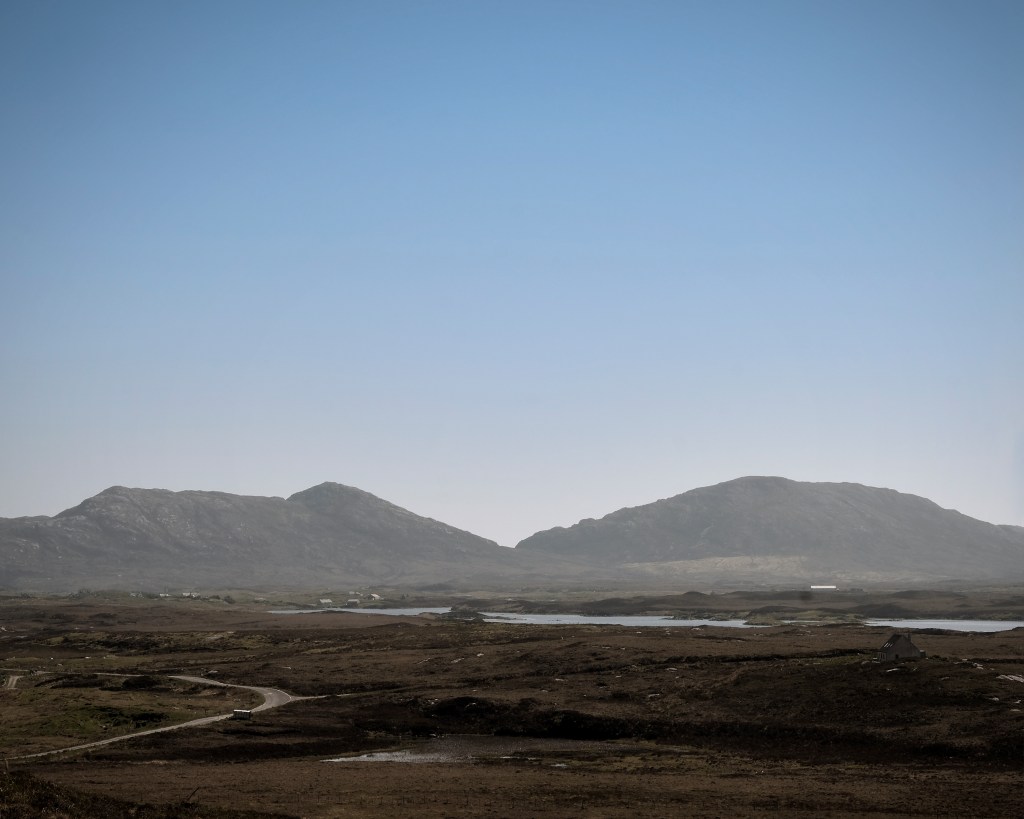
OMG! If Tuesday was hot, Wednesday was even hotter! It is official: there is a heat wave in the Uists. The ground has become crisp and crunchy after just two weeks of no rain. If this continues much longer, we might face a drought even in this watery world.
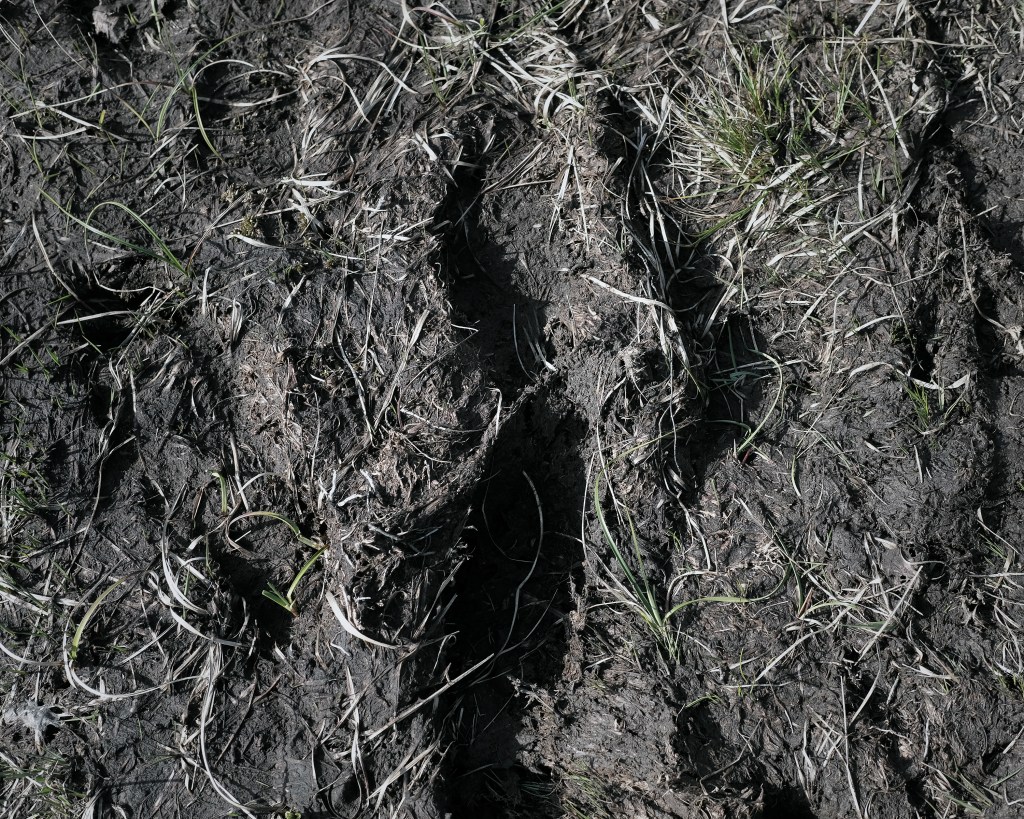
I set up my sitting area in the landscape at 2 PM, just like I have on previous occasions. Today, I decided to forgo my coat and opted for trainers instead of wellies, paired with jeans and a sun hat. As I sat, I could feel the heat enveloping me; it was sweltering! There wasn’t a cloud in the sky, and the air felt still—my personal monitor registered a mere 0.3 out of ten for wind.

The atmosphere around me was alive with sounds; I could hear skylarks chirping and singing joyfully in the surrounding landscape and insects buzzing loudly nearby. Occasionally, I caught the distant sound of a passing car breaking through. This day felt peaceful, intense and unusually hot – this was an extraordinary day.
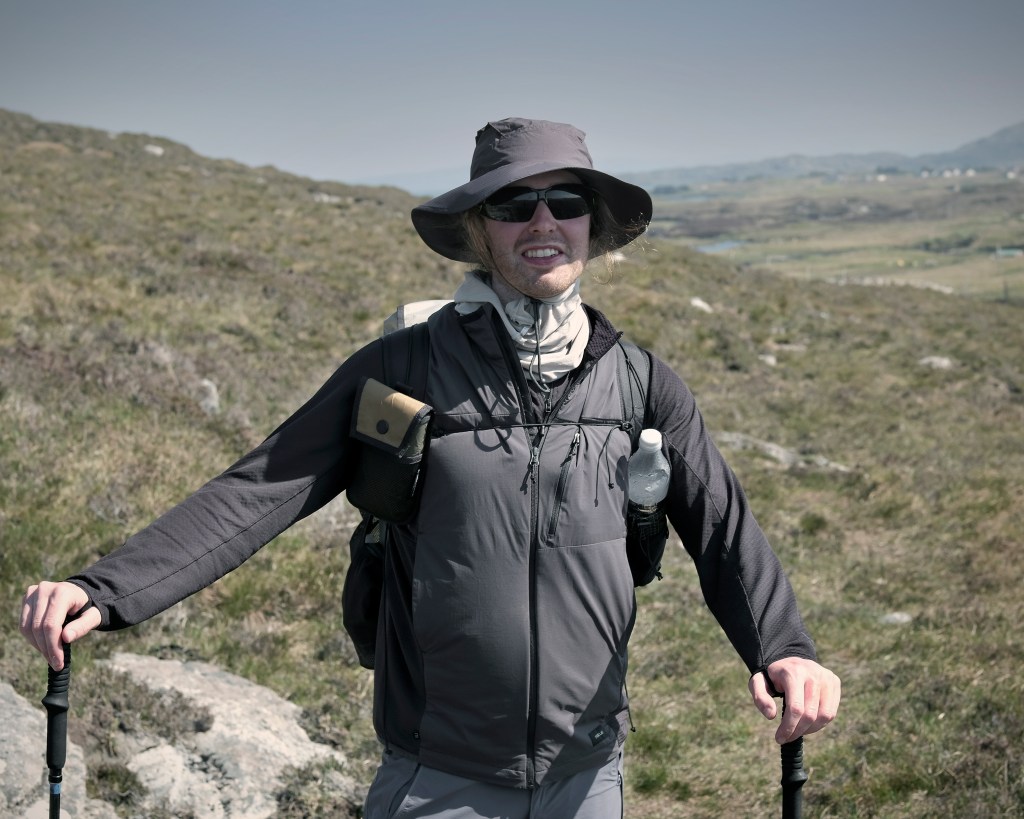
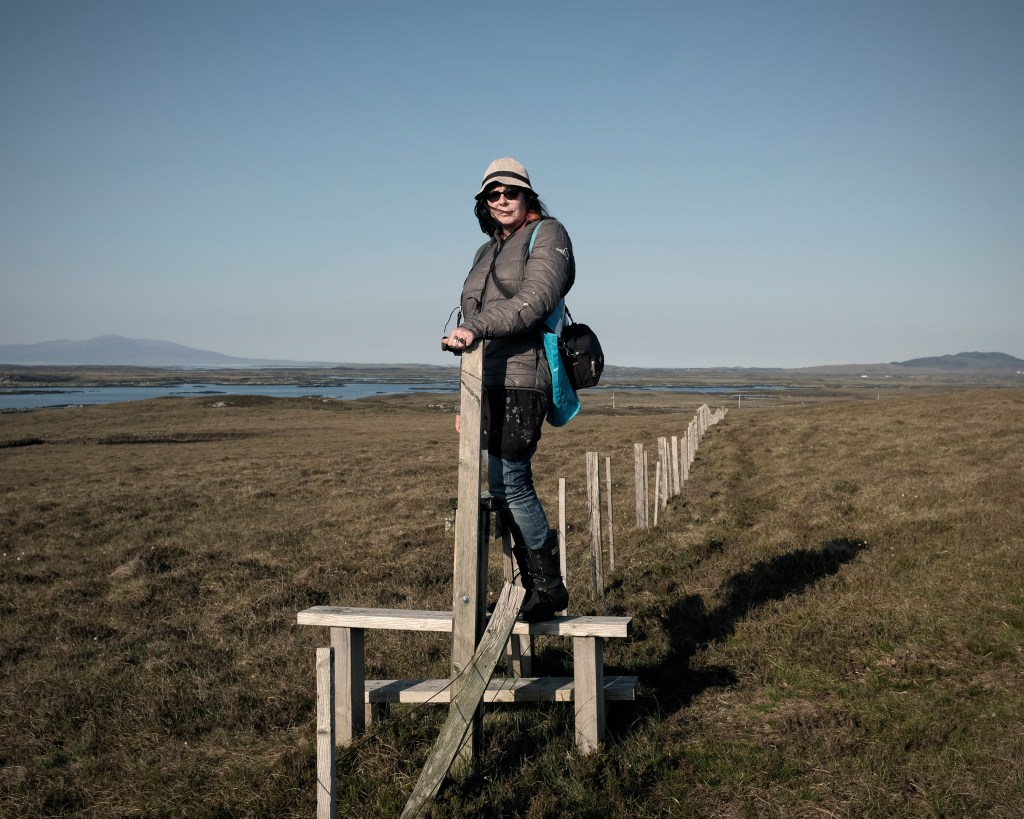
I had the pleasure of meeting Mathais, an eco walker and adventurer from Amsterdam. He shared with me his passion for Scotland and walking on the long trails, mostly solo. He has already explored the country extensively, tackling some of the most challenging and scenic long-distance walking trails.
I noticed Mathais looking a bit hot, I asked if the weather was bothering him. He smiled and mentioned that the weather was incredible, which I couldn’t help but agree with. What struck me as particularly interesting was his approach to sourcing water. He mentioned that he uses a filter, which enables him to safely drink water from the lochs. This not only reduces the need for carrying large amounts of water but also minimizes his environmental footprint.
Mathais’s backpack was noticeably smaller than those of other walkers I’ve seen. He attributed this to his ability to travel light, carrying only the essentials. His watch, equipped with GPS and various apps, seemed to be his primary navigation tool, allowing him to stay on track and explore the wilderness with confidence.
Our meeting turned into a pleasant conversation, and I was grateful when Mathais kindly agreed to let me take his photograph. He also expressed interest in following my blog, which I appreciated. Mathais’ approach to adventure, sustainability, and exploration was truly inspiring.

The weather was so warm – it was causing a wavy, shimmering effect rising from the ground making it look like the air itself was vibrating, creating a watery appearance. This is a visual phenomenon which is known as an inferior mirage. It happens because the air right near the hot ground is warmer and less dense than the cooler air above it. As light travels down from the sky or distant objects towards the ground, it passes through these layers of different temperatures and densities. This causes the light to bend upwards, away from the ground.
I spotted three magnificent herons flying back and forth. Their flight is incredibly elegant, a slow, powerful beat of their wings against the sky. I watched them heading towards a distant patch of woodland, a forestry plantation that serves as their nesting spot. This time of year is clearly a busy one for them; they fly tirelessly between the sea loch, likely foraging for food, for their chicks – a constant commute. It’s fascinating to witness their dedication and grace.
Tapestry of Connection
Day Twelve 13 05 25

I set out for an early evening walk on this beautiful Tuesday at 5 PM. All day the temperature had hovered around 18 to 19 degrees Celsius—quite warm for Uist! The air was filled with the delightful sound of a cuckoo calling in the distance, its call perfectly embodying the essence of onomatopoeia. It felt like summer had truly arrived.
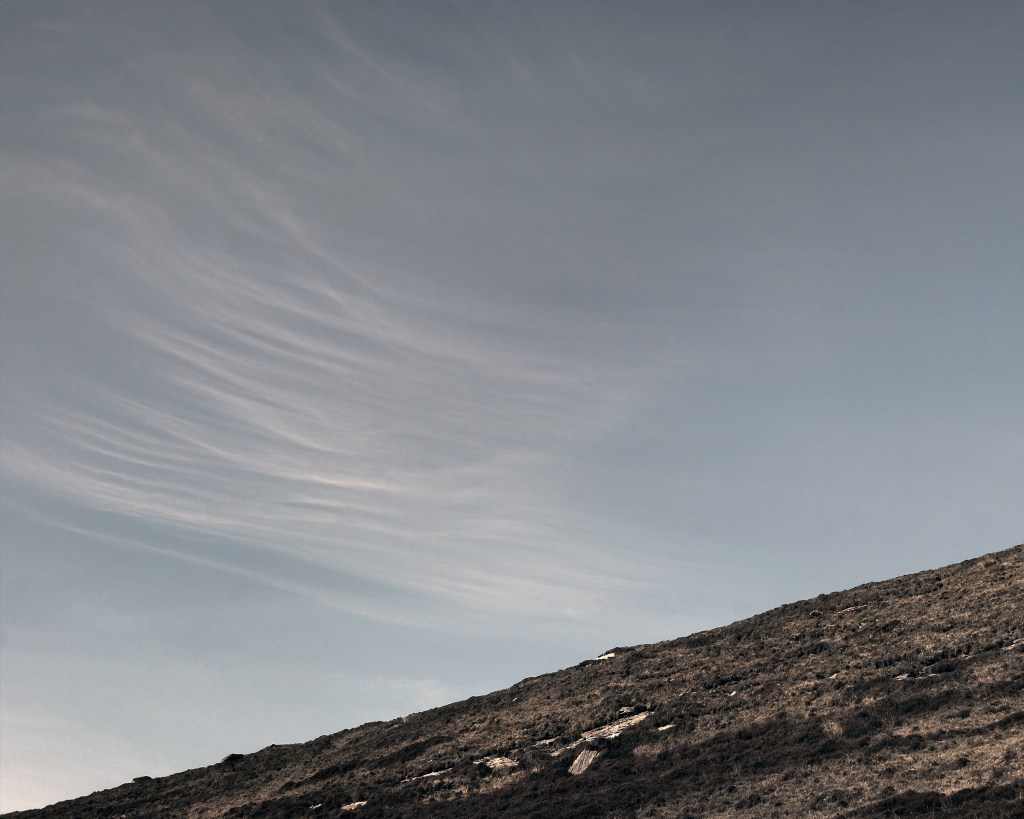
Looking up, I noticed the sky was filled with horse tail clouds, also known as mares’ tails. Their wispy forms danced across the sky, adding to the beauty of the day.
These cirrus clouds, specifically cirrus uncinus, hint at the promise of warm weather ahead.

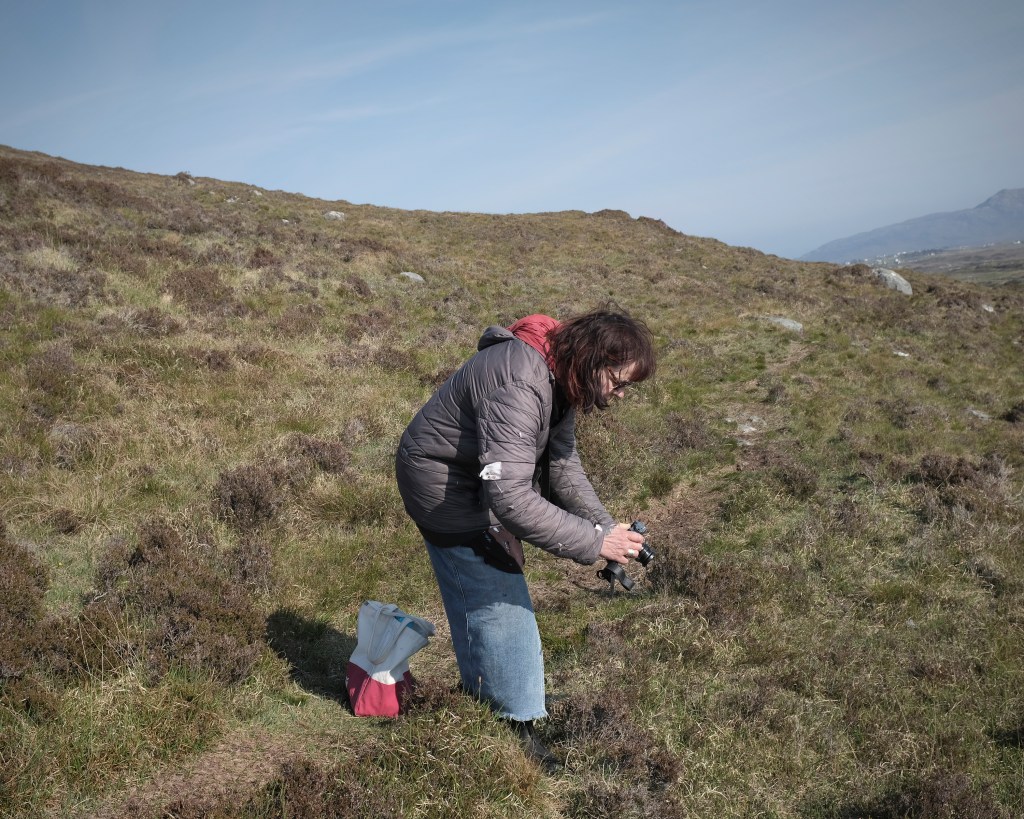
As I walked, I was enveloped by the sounds of summer—the buzzing of insects filled the air. This evening’s walk reminded me of how vibrant and alive everything is during this season. There’s also something deeply fulfilling about connecting with the natural world. It reminds me of my place within the larger ecosystem and fosters a sense of gratitude for the environment around me.
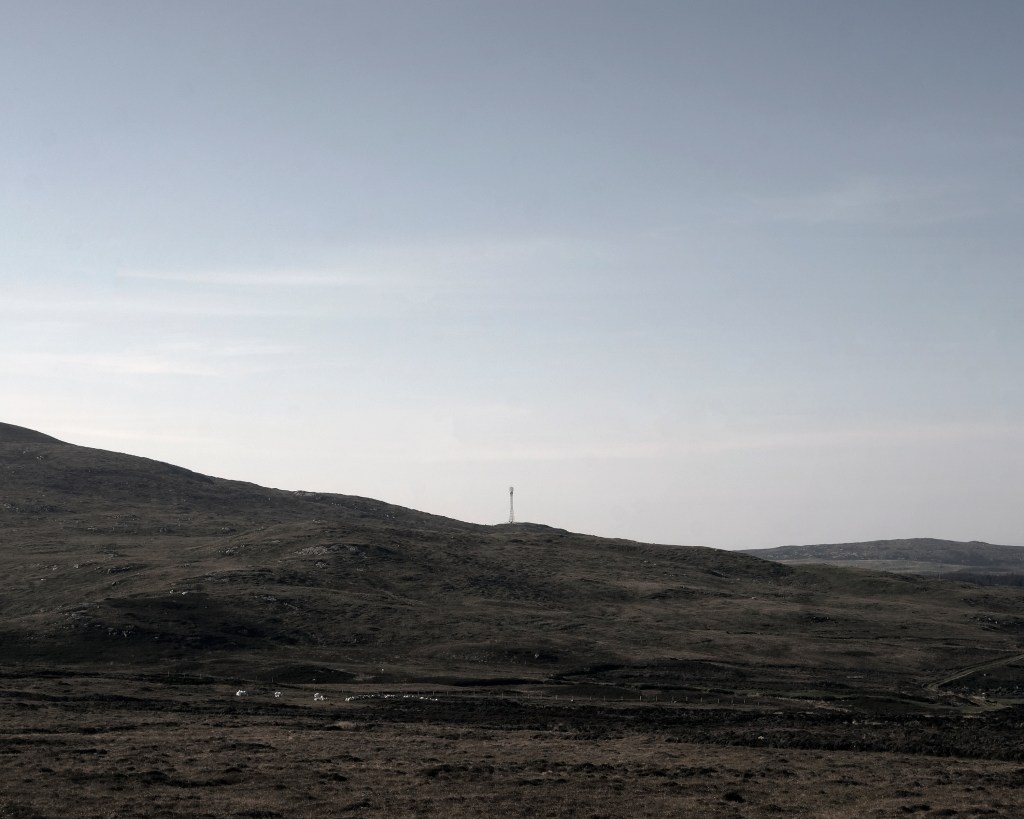
Regular walking along this mile-long stretch of the Hebridean Way, has increasingly attuned me to the subtle changes in the landscape around me. The dark, damp peaty soil is coming alive with new vegetation, and I can’t help but marvel at the resilience of nature. Just beyond Fairy Knoll to my left, I spot a peat cutter—a machine equipped with a large saw wheel designed for digging into the earth. This sight prompts me to reflect on the environmental dilemmas surrounding peat cutting.
Peatlands are vital ecosystems that play a crucial role in carbon storage, biodiversity, and water regulation. They act as significant carbon sinks, sequestering carbon dioxide from the atmosphere and helping mitigate climate change. However, when peat is cut and removed—whether for personal use or commercial purposes—it releases stored carbon back into the atmosphere, contributing to greenhouse gas emissions. The extraction process also disrupts local ecosystems and can lead to habitat loss for various species that depend on these unique environments.
The ethical considerations of cutting peat for personal use are complex. While some may argue that harvesting small amounts of peat for home heating or gardening is a traditional practice rooted in cultural heritage, it raises questions about sustainability and responsibility towards our environment.
In my own journey along this path, and as I observe the emerging plants and the delicate balance of life in this ecosystem, I feel compelled to consider more sustainable alternatives to peat use. There must be some more eco-friendly options available now that do not compromise our precious peatlands.
Spotted
- 2 swans
- 1 shelduck
- 1 deer – a doe
- 1 golden eagle
- No walkers
 Nicola Neate